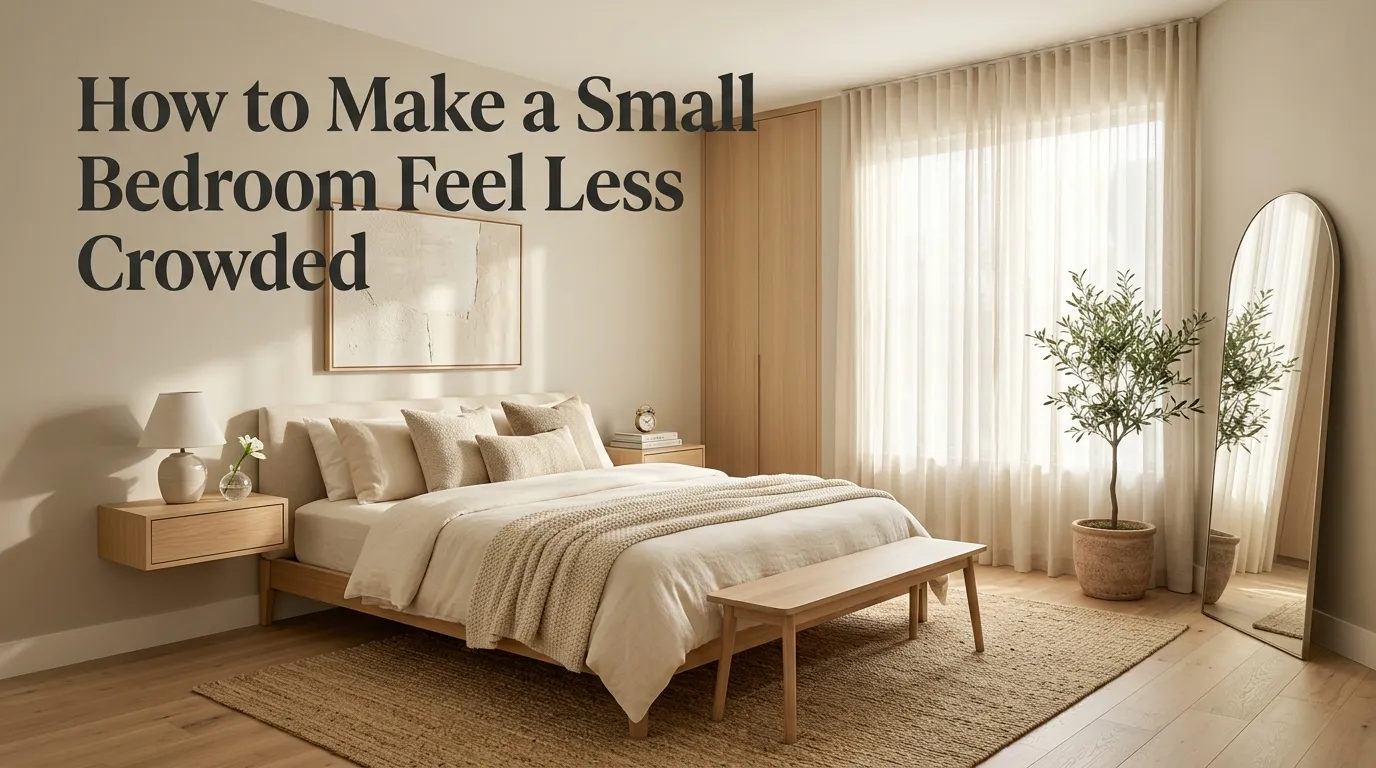
How to Make a Small Bedroom Feel Less Crowded
A small bedroom can feel comfortable, stylish, and inviting when the space is designed with intention. The problem is not always the size of the room — it is often how furniture, colors, storage, and everyday belongings interact within that limited area.
In my experience, many small bedrooms feel crowded because they contain too many visual distractions rather than because they lack actual space. I’ve noticed that homeowners often try to solve the problem by adding more storage furniture, but large pieces can sometimes make a small room feel even tighter.
A mistake many people make is focusing only on removing items instead of improving the overall design flow. Creating a spacious feeling comes from a combination of smart organization, proper furniture scale, lighting choices, and visual balance.
The good news is that even the smallest bedroom can feel more open with the right adjustments. Simple changes like choosing lighter colors, improving furniture placement, using vertical storage, and reducing unnecessary décor can dramatically change how the room feels.
A well-designed small bedroom should feel calm and functional. It should allow you to move comfortably, store what you need, and enjoy a relaxing environment without feeling surrounded by clutter.
This guide shares practical ideas to help you make a small bedroom feel less crowded without expensive renovations. Each idea focuses on realistic design strategies that improve space, comfort, and everyday usability.
Whether you live in a small apartment, a compact home, or simply want a more open-feeling bedroom, these ideas will help you create a space that feels brighter, calmer, and easier to enjoy.
Table of Contents
- Light Color Foundations — Create a more open visual feeling.
- Smart Furniture Scale — Choose pieces that fit the room.
- Clear Walking Paths — Improve movement and flow.
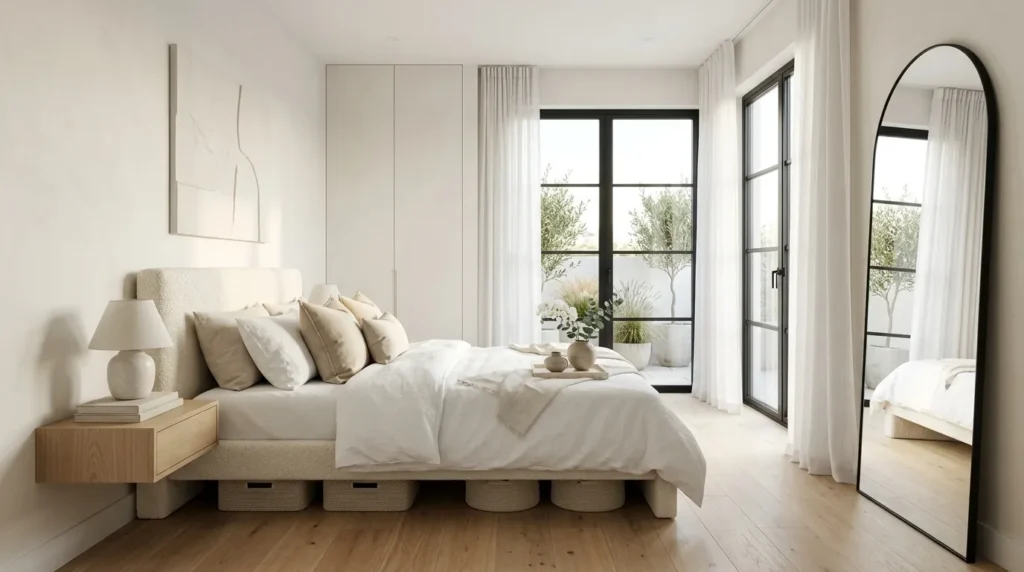
- Floating Storage Ideas — Save valuable floor space.
- Mirror Placement Tricks — Reflect light and create depth.
- Minimal Bedding Layers — Keep the bed visually balanced.
- Hidden Storage Solutions — Reduce visible clutter.
- Balanced Wall Decor — Add style without heaviness.
- Better Lighting Layers — Make the room feel larger.
- Simple Organization Habits — Maintain an open bedroom.
1. Light Color Foundations
Quick Benefits
- Makes rooms feel more spacious
- Reflects natural light
- Creates a peaceful atmosphere
- Provides a timeless design base
- Reduces visual heaviness
Why It Works
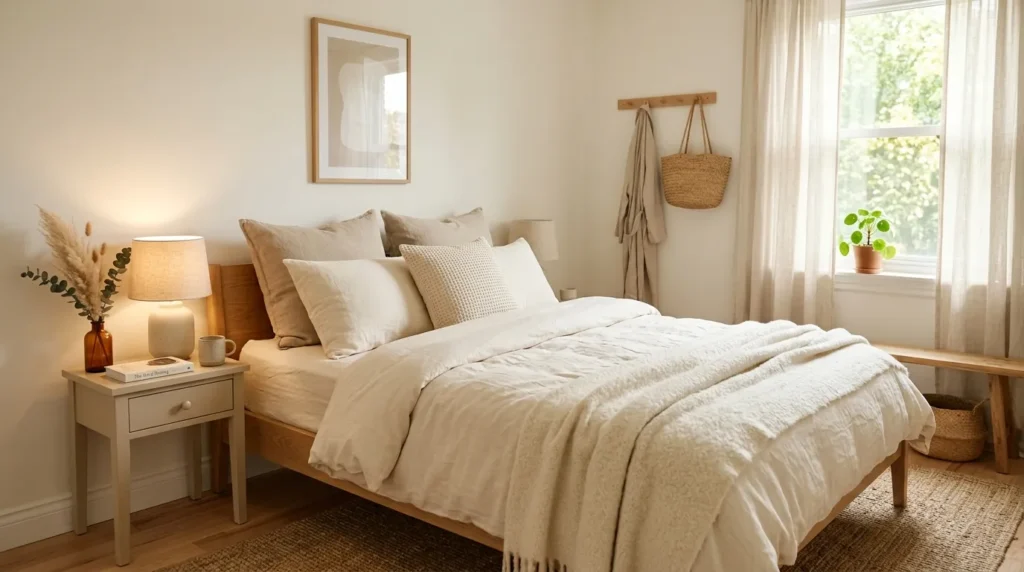
Color has a powerful effect on how we perceive space. Light shades help walls appear farther away and allow natural light to move throughout the room more easily.
In my experience, changing the color palette is one of the simplest ways to make a small bedroom feel more open. I’ve noticed that rooms with soft neutrals often feel calmer and larger compared with spaces filled with dark, contrasting colors.
A mistake many homeowners make is assuming small rooms must have plain white walls. While white works beautifully, other soft shades can create warmth and personality without making the room feel closed in.
How To Style It
Choose colors such as warm white, cream, soft beige, light gray, or muted sage for walls and larger furniture pieces.
Create a cohesive palette by keeping bedding, curtains, and rugs within similar tones.
Add subtle contrast through textures rather than strong color changes. Linen, woven fabrics, wood accents, and soft patterns can add interest while maintaining an open feeling.
2. Smart Furniture Scale
Quick Benefits
- Prevents overcrowding
- Improves room balance
- Creates better movement
- Makes the space feel intentional
- Maximizes usable area
Why It Works
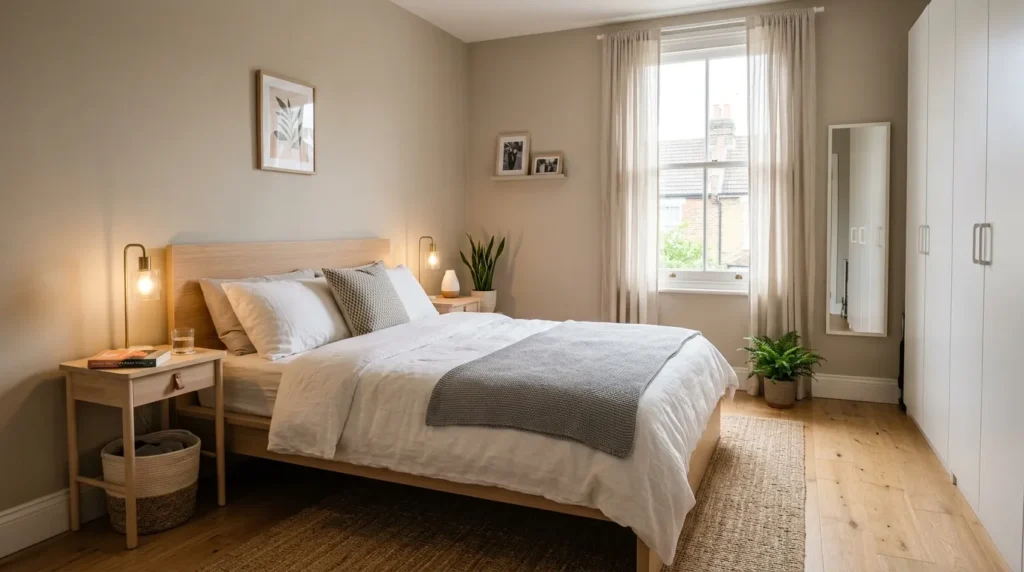
Furniture size has a major impact on how spacious a bedroom feels. Oversized beds, bulky dressers, and large nightstands can quickly overwhelm a small room.
I’ve noticed that many homeowners focus on fitting more furniture into a bedroom rather than choosing pieces that match the room’s proportions.
A mistake many people make is believing larger furniture creates more comfort. In small spaces, the right scale often creates a much more relaxing environment.
How To Style It
Choose furniture with slim profiles, raised legs, or lighter visual designs.
Consider smaller nightstands, narrow dressers, or wall-mounted alternatives.
Avoid filling every empty corner with furniture. Leaving some open space helps the room breathe and creates a more balanced appearance.
3. Clear Walking Paths
Quick Benefits
- Improves room flow
- Makes movement easier
- Creates a spacious feeling
- Reduces visual stress
- Enhances daily comfort
Why It Works
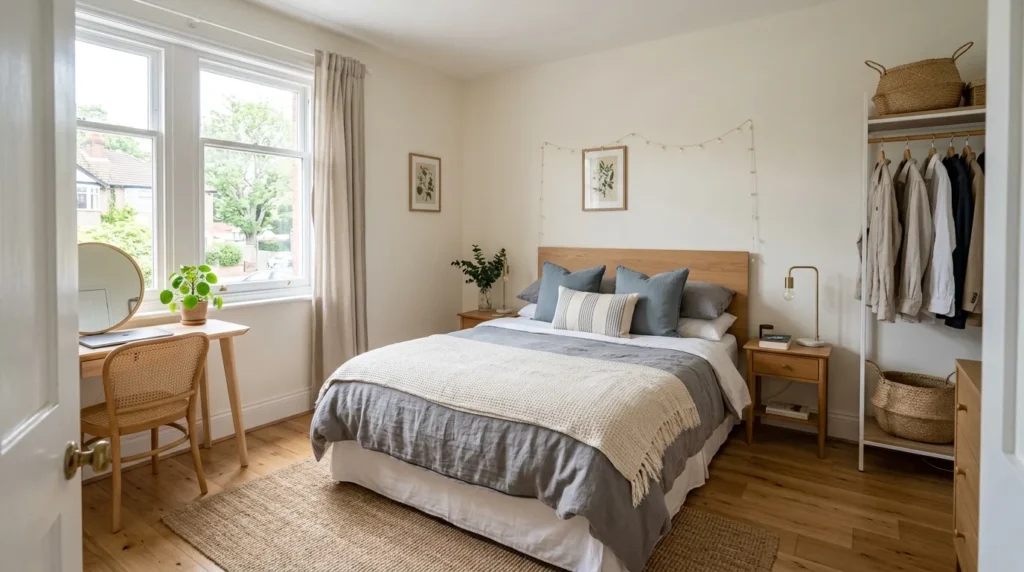
The way people move through a bedroom affects how large the room feels. Even a small bedroom can feel comfortable when pathways remain clear.
In my experience, improving furniture placement can sometimes create a bigger impact than buying new storage solutions.
I’ve noticed that crowded walkways make rooms feel smaller because the eye immediately notices obstacles and tight spaces.
How To Style It
Position the bed so there is comfortable access from the main entrance.
Avoid placing furniture directly in walking paths or near doors.
Keep the area around the bed open whenever possible.
A simple layout with fewer obstacles often creates a more spacious feeling than adding more decorative elements.
4. Floating Storage Ideas
Quick Benefits
- Saves floor space
- Creates cleaner lines
- Adds practical storage
- Makes walls useful
- Keeps rooms visually open
Why It Works
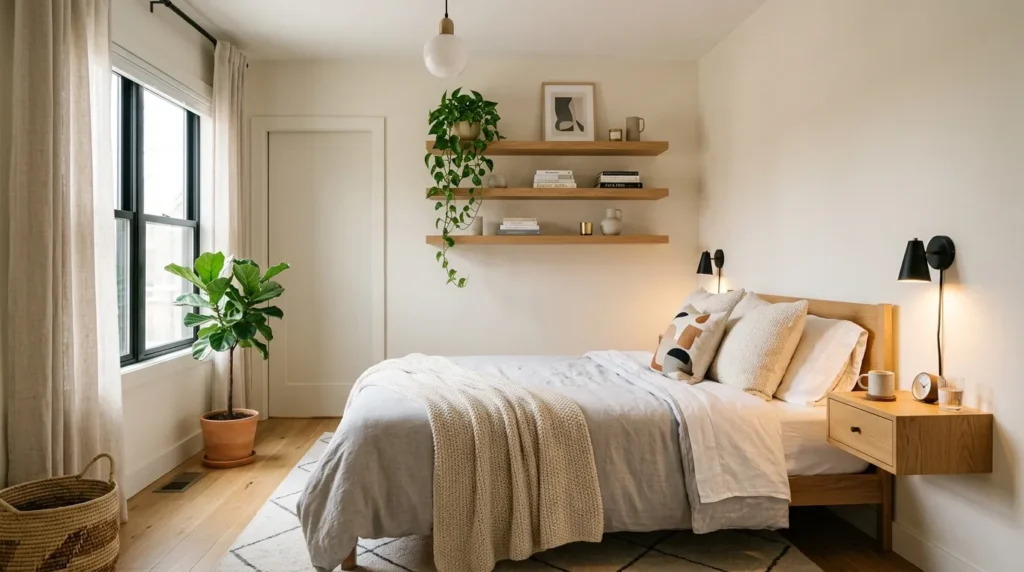
Floating storage solutions create functionality without taking up valuable floor space. In small bedrooms, using walls effectively can dramatically improve how the room feels.
I’ve noticed that wall-mounted furniture often makes compact bedrooms appear more modern and organized because the floor remains visible.
A mistake many homeowners make is relying only on traditional furniture pieces that consume precious floor area.
How To Style It
Install floating shelves, wall-mounted nightstands, or vertical storage cabinets.
Use shelves for books, plants, artwork, and small baskets.
Choose simple designs that blend with the bedroom style rather than creating visual clutter.
Keeping storage elevated helps maintain an airy and open appearance.
5. Mirror Placement Tricks
Quick Benefits
- Creates the illusion of more space
- Reflects natural light
- Adds decorative style
- Makes rooms feel brighter
- Enhances visual depth
Why It Works
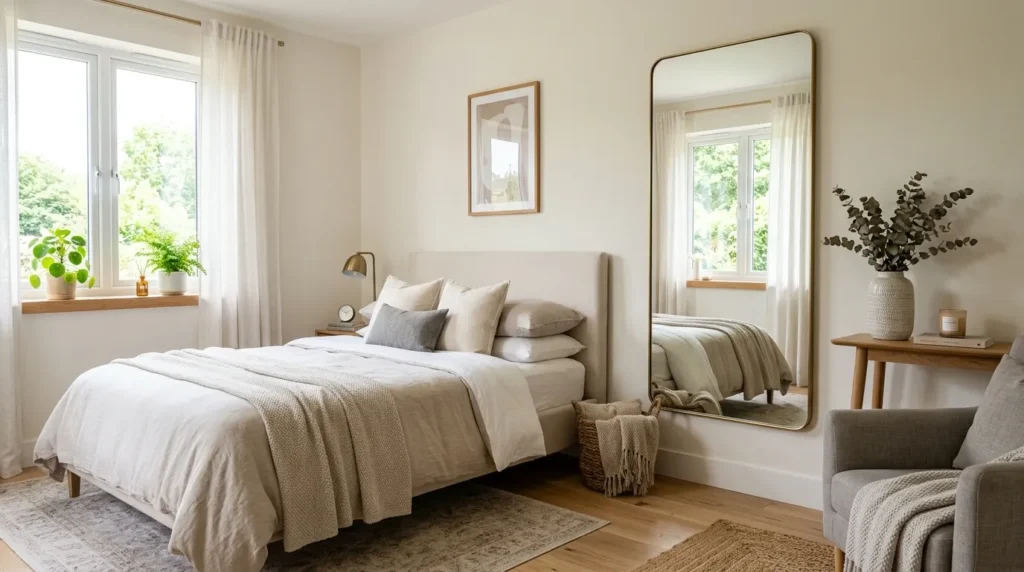
Mirrors are one of the oldest design tricks for making smaller spaces feel larger. By reflecting light and surrounding elements, they create the impression of additional depth and openness.
In my experience, a strategically placed mirror can completely change how a small bedroom feels. I’ve noticed that rooms with limited natural light especially benefit from reflective surfaces because they help distribute brightness throughout the space.
A mistake many homeowners make is adding mirrors without considering placement. A mirror should enhance the room, not simply occupy empty wall space.
How To Style It
Place a large mirror opposite a window to reflect natural light and make the room feel brighter.
Choose full-length mirrors for narrow bedrooms because they add height and create a stronger sense of openness.
For a decorative touch, use mirrors with slim frames in finishes like wood, brass, or matte black that complement the bedroom style.
Avoid covering too many walls with mirrors, as balance is important for a comfortable atmosphere.
6. Minimal Bedding Layers
Quick Benefits
- Creates a cleaner appearance
- Makes the bed feel less overwhelming
- Improves visual balance
- Enhances relaxation
- Keeps small rooms airy
Why It Works
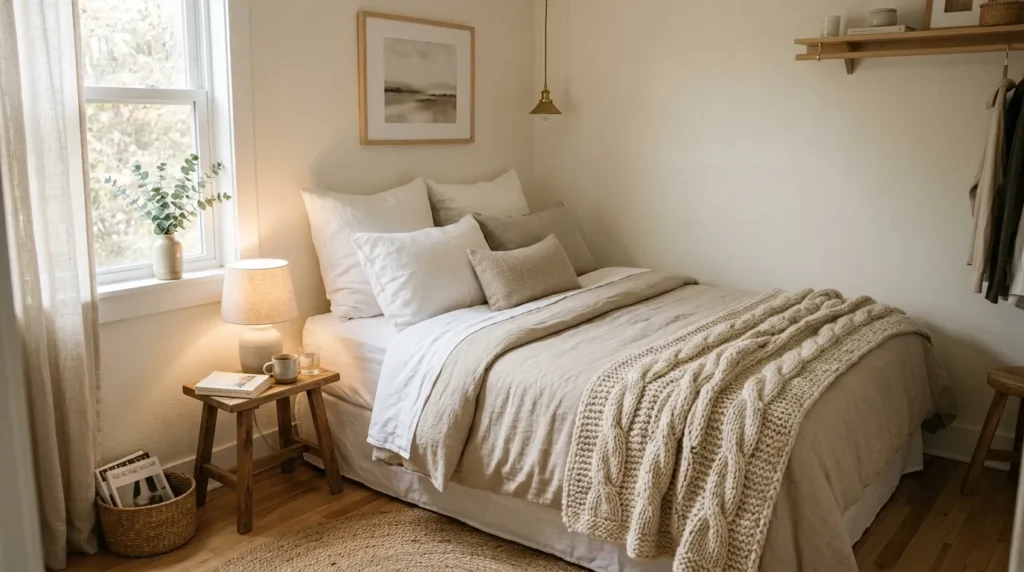
The bed is usually the largest item in a bedroom, which means bedding choices strongly affect how spacious the room feels. Too many pillows, heavy blankets, and oversized layers can make a small bedroom appear crowded.
I’ve noticed that small bedrooms often look more expensive when the bedding is simple and thoughtfully layered. A mistake many homeowners make is adding too many decorative pillows because they want a luxury look, but excessive layers can reduce comfort and openness.
A balanced bed design creates a calm focal point without dominating the entire room.
How To Style It
Choose simple bedding in light or neutral colors to create a clean foundation.
Use one textured blanket or throw instead of multiple heavy layers.
Add a few pillows with different shapes and fabrics rather than filling the entire headboard area.
Keep the bed visually connected to the rest of the room by coordinating bedding colors with curtains, rugs, or wall tones.
7. Hidden Storage Solutions
Quick Benefits
- Reduces visible clutter
- Keeps surfaces cleaner
- Improves bedroom function
- Creates a calmer atmosphere
- Maximizes limited space
Why It Works
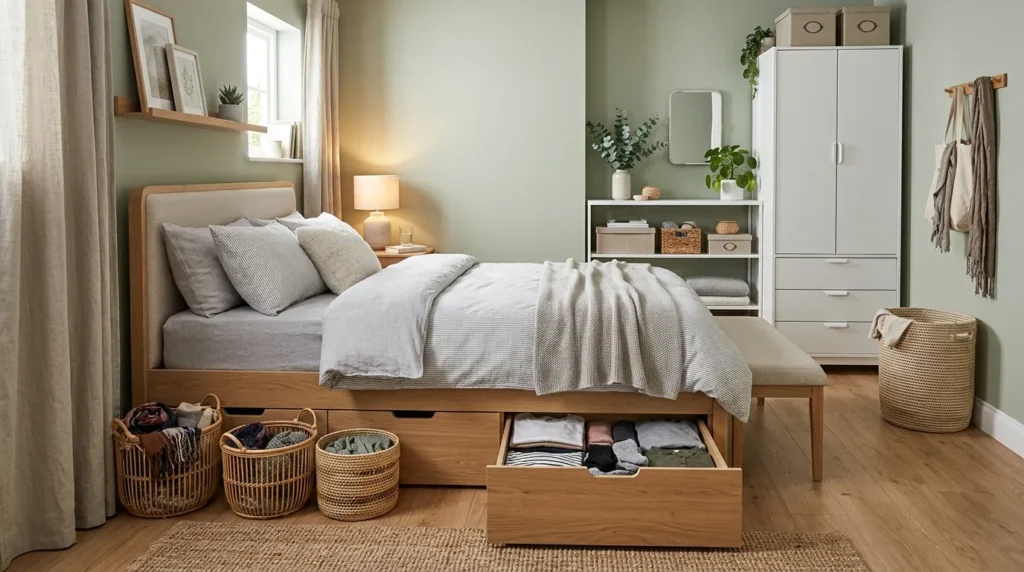
Visible clutter makes small bedrooms feel smaller because the eye has fewer places to rest. Hidden storage allows essential belongings to stay accessible while maintaining a clean appearance.
In my experience, the best small bedrooms are not necessarily minimalist — they simply have smart places for everyday items.
I’ve noticed that homeowners often underestimate how much visual space can be created by hiding small collections of belongings.
A mistake many people make is keeping storage solutions visible and overcrowded instead of choosing options that blend naturally with the room.
How To Style It
Use storage beds, baskets, drawer organizers, and furniture with built-in compartments.
Store seasonal clothing, extra bedding, and occasional-use items in less visible areas.
Use decorative boxes or woven baskets to hide smaller items while adding texture to the room.
Keep frequently used belongings organized so they do not accumulate on surfaces.
8. Balanced Wall Decor
Quick Benefits
- Adds personality
- Creates style without clutter
- Makes walls feel intentional
- Enhances the room design
- Improves visual balance
Why It Works
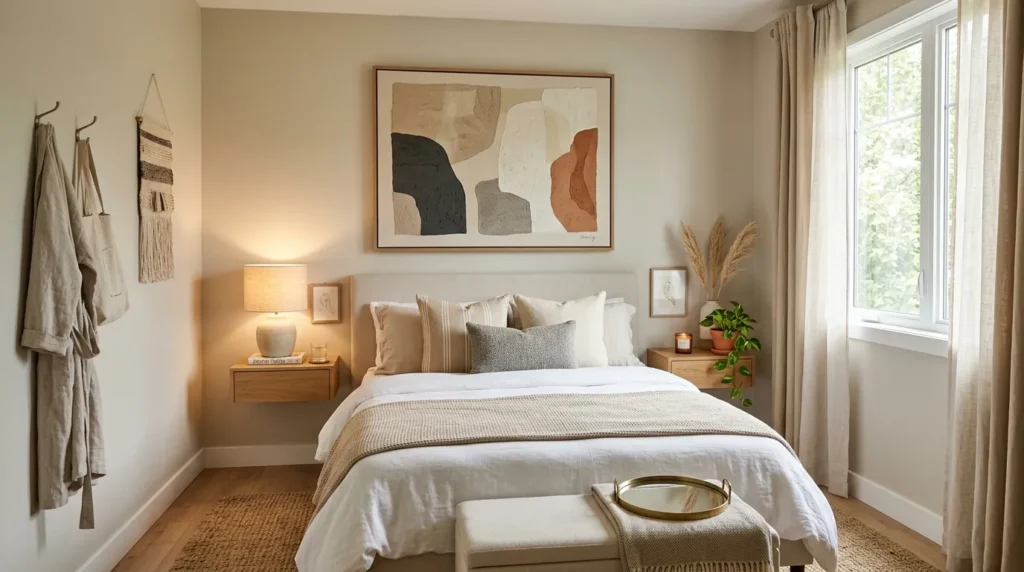
Wall décor can make a bedroom feel complete, but too many frames, shelves, or decorative pieces can create visual weight. The goal is to decorate walls without making them feel busy.
I’ve noticed that small bedrooms often benefit from fewer but larger decorative pieces rather than many tiny items.
A mistake many homeowners make is filling every empty wall because they feel the room looks unfinished. Empty space is actually an important part of good design.
How To Style It
Choose one main focal point, such as artwork above the bed or a large framed print.
Use simple arrangements with enough space between pieces.
Consider oversized artwork because it can create impact without requiring multiple decorations.
Keep colors connected to the bedroom palette for a cohesive and peaceful appearance.
9. Better Lighting Layers
Quick Benefits
- Makes rooms feel brighter
- Creates depth
- Improves comfort
- Enhances the décor
- Supports different activities
Why It Works
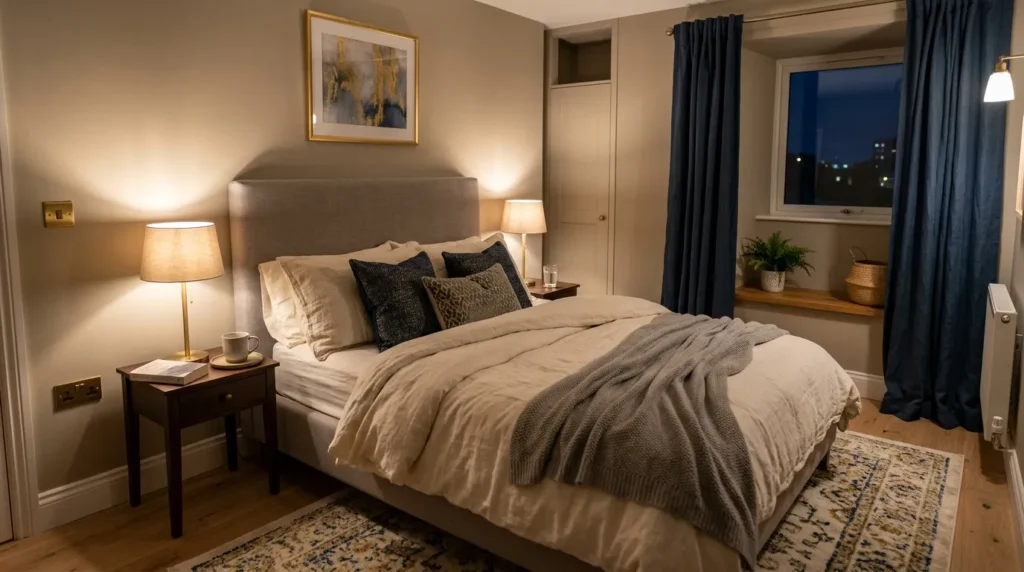
Lighting changes how we experience space. A small bedroom with layered lighting can feel much larger and more welcoming than a room with only one harsh overhead fixture.
In my experience, lighting is one of the most overlooked ways to improve a bedroom. I’ve noticed that warm, balanced lighting makes even compact spaces feel more comfortable and intentional.
A mistake many homeowners make is relying only on ceiling lights, which often create flat and uninviting illumination.
How To Style It
Combine overhead lighting with bedside lamps, wall sconces, or floor lamps.
Choose warm bulbs to create a relaxing atmosphere.
Use lighting near mirrors, artwork, and reading areas to add depth.
Small bedrooms benefit from fixtures with slim profiles that provide function without taking up visual space.
10. Simple Organization Habits
Quick Benefits
- Maintains an open feeling
- Prevents clutter buildup
- Makes cleaning easier
- Supports daily routines
- Keeps the bedroom comfortable
Why It Works
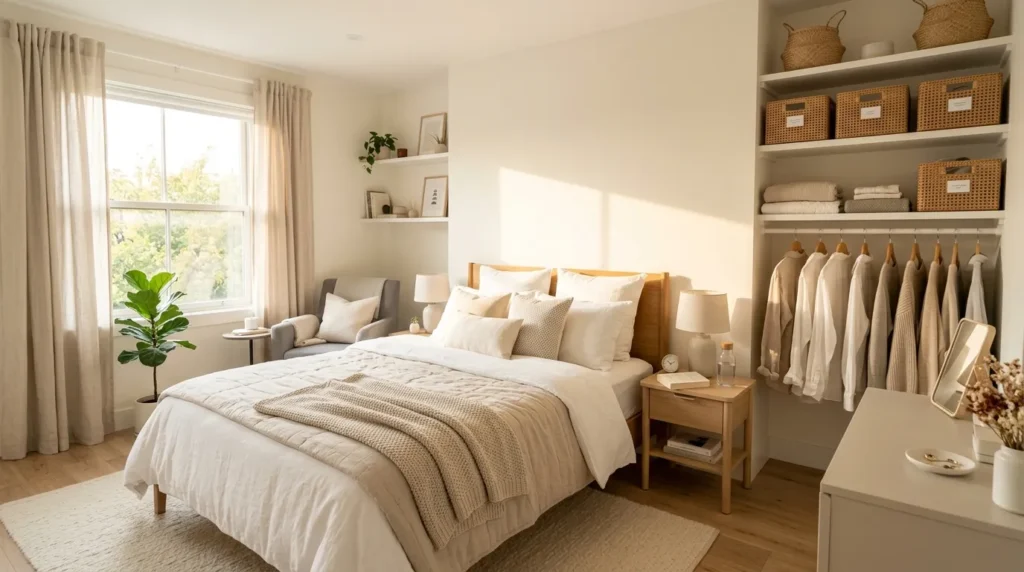
A small bedroom stays spacious when organization becomes part of everyday life. Without simple habits, even a beautifully designed room can quickly become crowded again.
I’ve noticed that homeowners who maintain organized bedrooms usually do not follow complicated systems. They simply create routines that are easy to repeat.
A mistake many people make is completing one big cleanup but not changing the habits that created clutter in the first place.
How To Style It
Create small daily routines such as putting clothing away, clearing bedside surfaces, and returning items to their proper places.
Review belongings seasonally and remove items that no longer support your lifestyle.
Keep organization simple enough that everyone using the bedroom can maintain it.
A few minutes of daily attention can keep a small bedroom feeling open and peaceful.
Frequently Asked Questions
How can I make my small bedroom feel bigger without renovating?
You can create a more spacious feeling by using lighter colors, improving furniture placement, adding mirrors, reducing clutter, and choosing furniture with a smaller visual footprint. Simple design changes often make a noticeable difference without requiring construction or major expenses.
What colors make a small bedroom look larger?
Soft shades like warm white, cream, beige, light gray, and muted pastels can help a small bedroom feel brighter and more open. These colors reflect light better and create a calm background that reduces visual heaviness.
Should I use a large bed in a small bedroom?
A large bed can work in a small bedroom if the layout allows comfortable movement. The key is balancing the bed size with appropriately scaled furniture and keeping unnecessary pieces to a minimum.
How do I reduce clutter in a small bedroom?
Start by removing unused items, then create specific storage places for belongings you keep. Hidden storage, organized closets, and daily reset habits help prevent clutter from returning.
Are mirrors good for small bedrooms?
Yes. Mirrors can reflect light and create the appearance of additional space. Large mirrors placed near windows or opposite bright areas are especially effective in making bedrooms feel more open.
How do I decorate a small bedroom without making it crowded?
Choose fewer, larger decorative pieces instead of many small accessories. Keep a consistent color palette, use wall space wisely, and allow some empty areas so the room feels balanced.
Conclusion
Making a small bedroom feel less crowded is about creating balance between style, storage, and functionality. The goal is not removing everything you own — it is designing a room where every item has a purpose and every area feels intentional.
Small changes like choosing lighter colors, improving furniture placement, adding smart storage, and simplifying décor can completely transform how a bedroom feels.
A comfortable bedroom does not depend on size. With thoughtful design decisions and simple organization habits, even compact spaces can feel open, peaceful, and welcoming.
Start with the changes that make the biggest difference for your lifestyle, and gradually build a bedroom that feels calm, functional, and beautifully organized.
Related Articles
- How to Organize a Small Bedroom in One Weekend
- 10 Cozy Aesthetic Bedroom Ideas for Every Home
- How to Make a Small Bedroom Look Brighter Naturally
- Small Bedroom Storage Ideas That Maximize Space
- Minimal Bedroom Ideas for a Calm Home