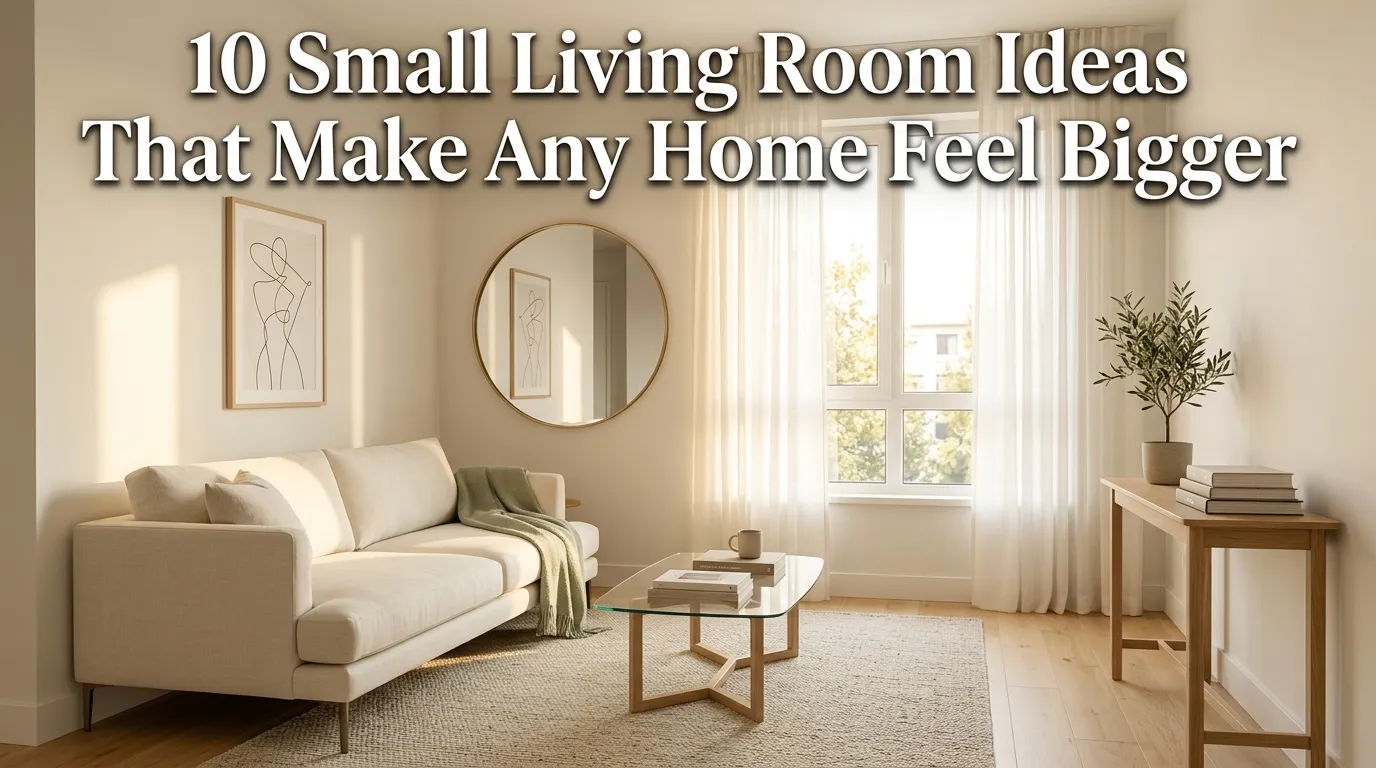
10 Small Living Room Ideas That Make Any Home Feel Bigger
A small living room can still feel spacious, stylish, and comfortable with the right design choices. The secret is not having more space—it is using every inch thoughtfully. Through smart furniture selection, strategic layouts, light colors, and clever décor techniques, even the smallest living areas can create the feeling of openness.
Modern small living room design focuses on functionality without sacrificing beauty. Multi-purpose furniture, vertical storage, mirrors, natural lighting, and minimal styling help create an airy atmosphere while maintaining warmth and personality.
I’ve found that the most successful small living rooms are not filled with more furniture or decorations. Instead, they focus on balance, proportion, and carefully selected pieces that serve both practical and aesthetic purposes.
Whether you live in an apartment, a small house, or simply want your living room to feel more open, these ideas will help you maximize your space while creating a cozy and modern environment.
Table of Contents
- Choose Light Neutral Colors
- Use Multi-Functional Furniture
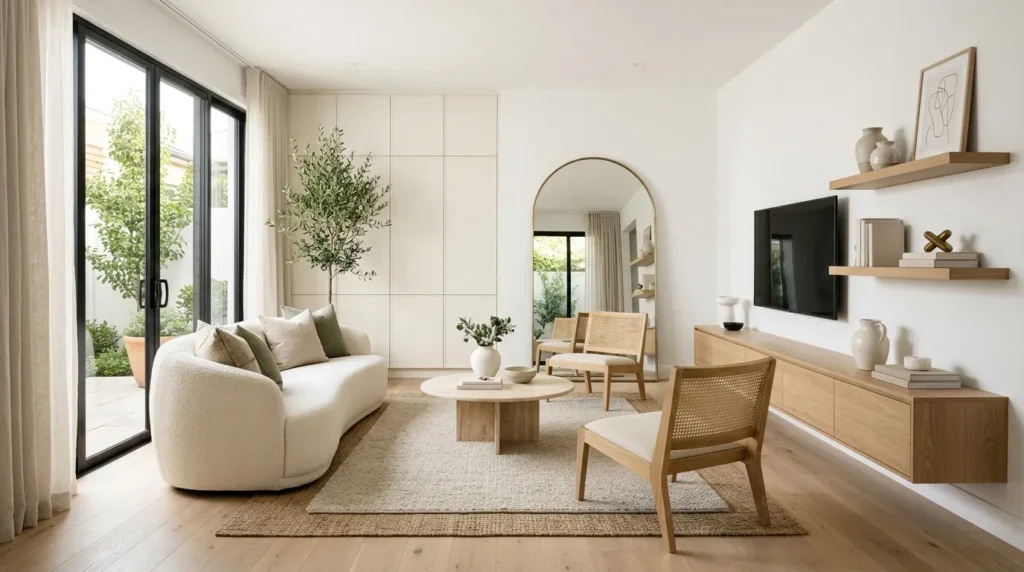
- Add Oversized Mirrors
- Create a Smart Furniture Layout
- Use Vertical Storage Solutions
- Select a Compact Sofa Style
- Maximize Natural Light
- Choose Furniture With Visible Legs
- Keep Décor Simple and Intentional
- Add Consistent Design Elements
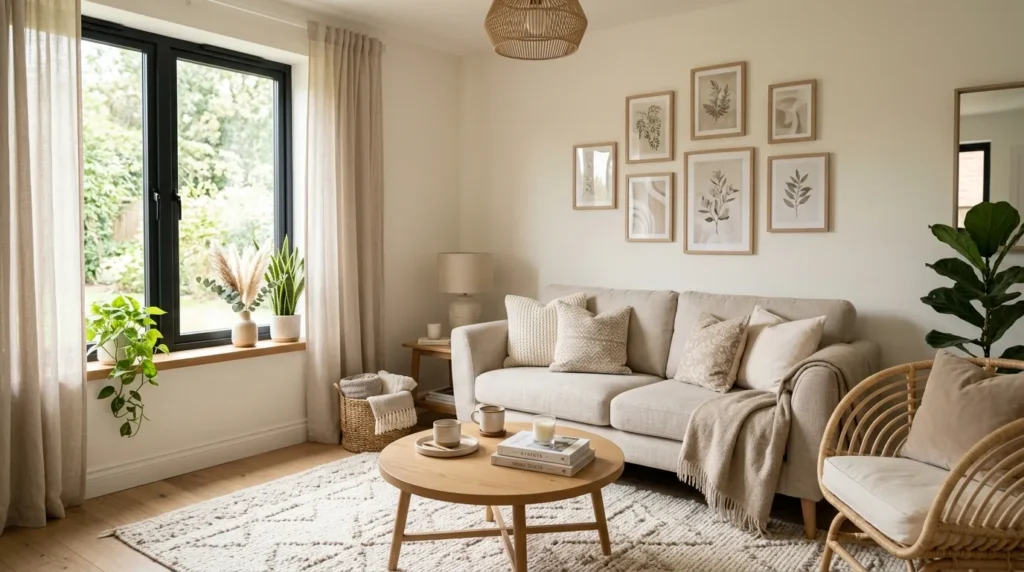
1. Choose Light Neutral Colors
Quick Benefits
- Makes spaces feel larger
- Reflects more light
- Creates a calm atmosphere
- Works with many styles
- Feels timeless
Why It Works
Light colors visually expand a room by creating a brighter and more open appearance. Shades like warm white, cream, beige, soft gray, and light taupe help small living rooms feel less enclosed.
I’ve found that a consistent color palette creates better flow and prevents small spaces from feeling visually crowded.
How To Style It
Use a light-colored sofa, neutral walls, soft rugs, and matching curtains. Add small accents through pillows, artwork, and greenery.
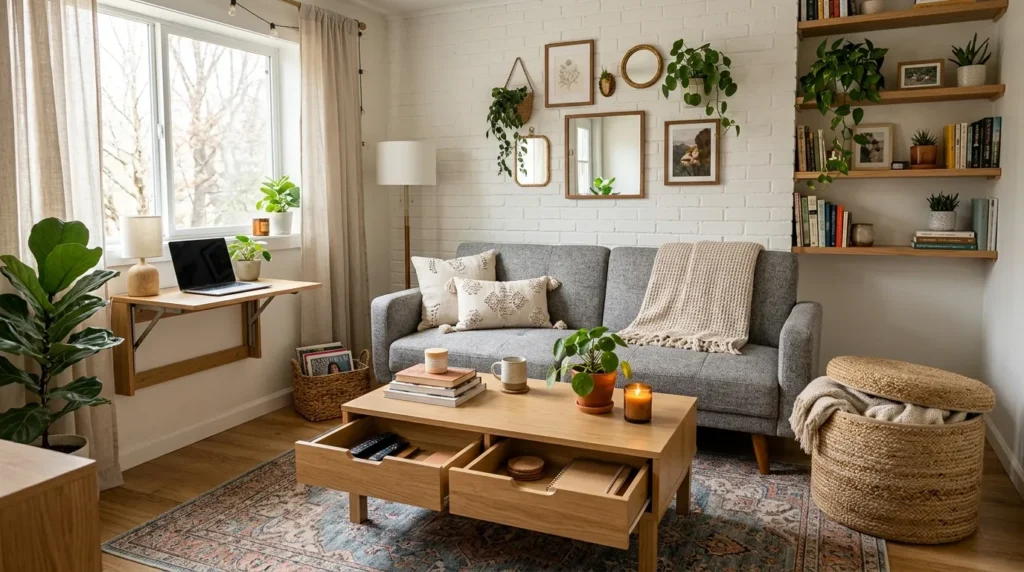
2. Use Multi-Functional Furniture
Quick Benefits
- Saves space
- Improves functionality
- Reduces clutter
- Maximizes every area
- Creates flexibility
Why It Works
Furniture that serves multiple purposes is essential in smaller living rooms. Pieces like storage ottomans, nesting tables, and convertible sofas help maintain comfort while reducing the need for extra furniture.
I’ve found that smart furniture choices often make a bigger difference than increasing the room size.
How To Style It
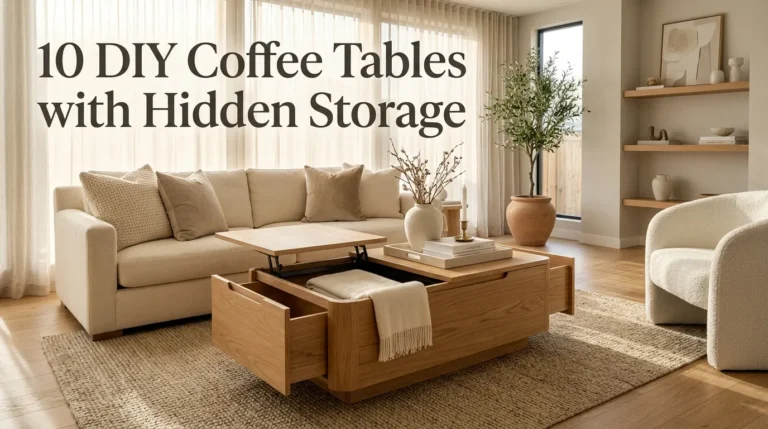
Choose an ottoman that works as seating and storage, a coffee table with drawers, or a sofa bed for additional functionality.
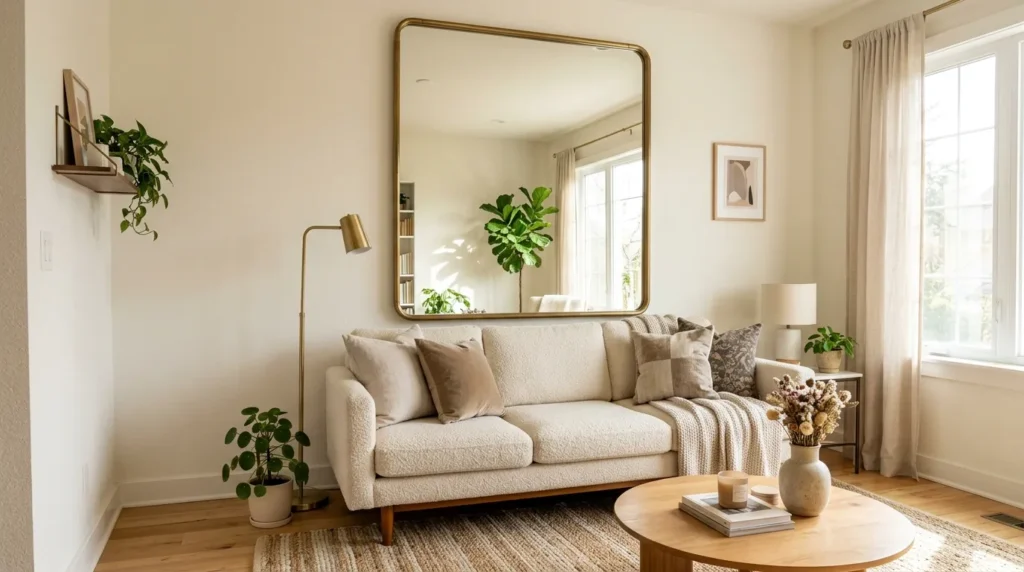
3. Add Oversized Mirrors
Quick Benefits
- Creates the illusion of space
- Reflects natural light
- Adds elegance
- Enhances décor
- Makes rooms feel brighter
Why It Works
Mirrors are one of the oldest interior design tricks for making small spaces appear larger. They reflect light and create visual depth, making walls feel farther apart.
I’ve found that one large mirror often creates more impact than several small decorative pieces.
How To Style It
Place a large mirror opposite a window or behind a sofa. Choose modern frames in black, brass, wood, or neutral finishes.
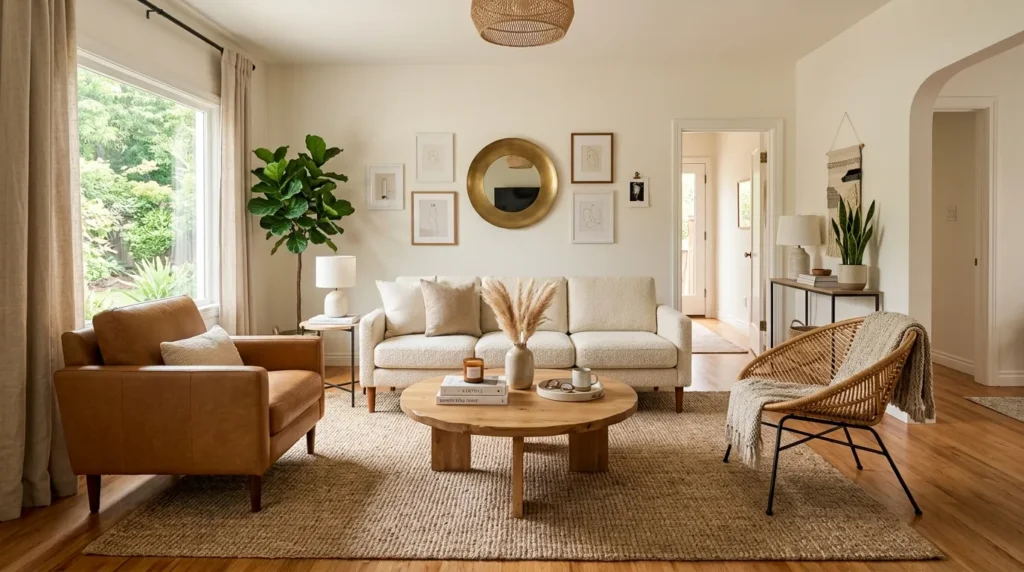
4. Create a Smart Furniture Layout
Quick Benefits
- Improves movement
- Opens the room
- Creates better flow
- Enhances comfort
- Maximizes space
Why It Works
A thoughtful furniture arrangement helps a small living room feel organized rather than cramped. The goal is to create clear pathways and a comfortable conversation area.
I’ve found that poor layouts are one of the biggest reasons small rooms feel smaller than they actually are.
How To Style It
Float furniture slightly away from walls when possible, keep walkways open, and arrange seating around a central focal point like a coffee table or fireplace.
5. Use Vertical Storage Solutions
Quick Benefits
- Saves floor space
- Adds organization
- Draws the eye upward
- Reduces clutter
- Enhances style
Why It Works
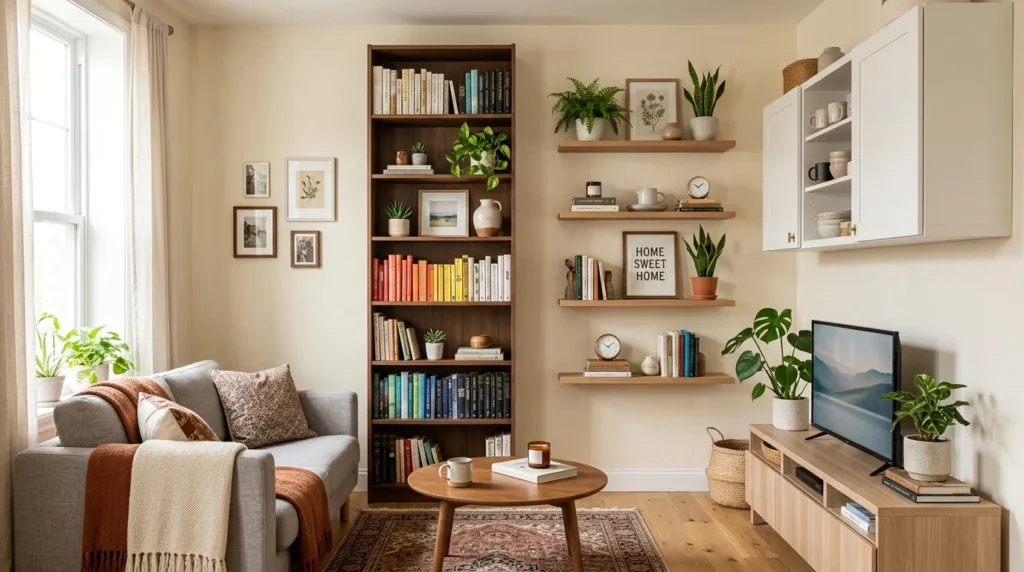
Using vertical space allows you to store items without making the floor area feel crowded. Tall shelves and wall-mounted solutions create functionality while maintaining openness.
I’ve found that taking advantage of wall space is one of the best strategies for small homes.
How To Style It
Install floating shelves, tall bookcases, wall-mounted cabinets, or vertical décor displays to keep items organized and attractive.
6. Select a Compact Sofa Style
Quick Benefits
- Maximizes seating space
- Keeps the room open
- Improves visual balance
- Creates comfort
- Fits small layouts
Why It Works
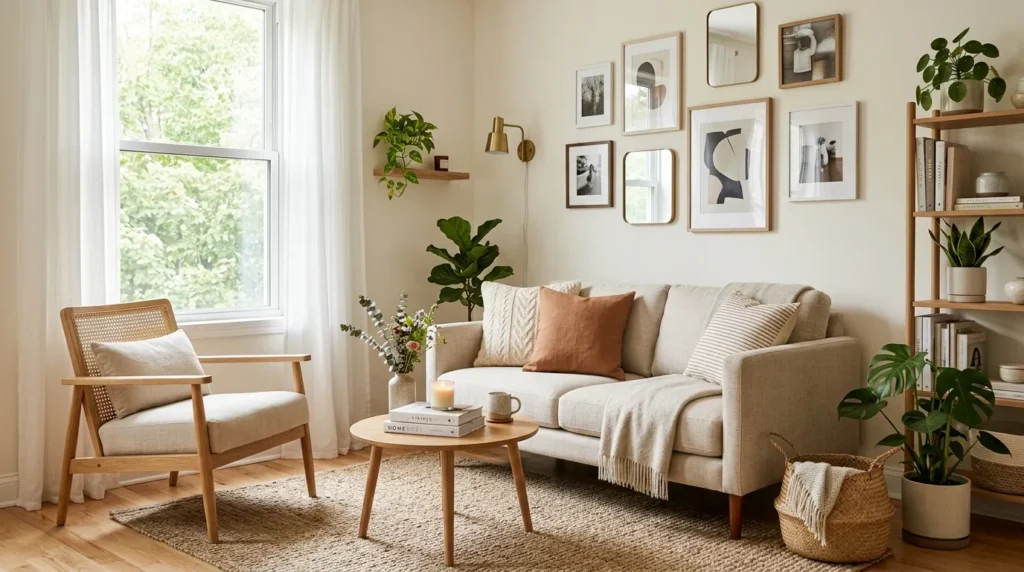
The sofa is usually the largest piece of furniture in a living room, so choosing the right size has a major impact on how spacious the room feels. Oversized sofas can quickly overwhelm a small area, while compact designs maintain comfort without making the room feel crowded.
I’ve found that a well-proportioned sofa creates a more expensive and thoughtfully designed appearance than simply choosing the largest option available.
How To Style It
Choose a loveseat, apartment-size sectional, or slim-profile sofa with clean lines. Pair it with lightweight accent chairs or ottomans that can easily move when needed.
7. Maximize Natural Light
Quick Benefits
- Makes rooms feel larger
- Creates a brighter atmosphere
- Enhances décor colors
- Improves openness
- Feels more welcoming
Why It Works
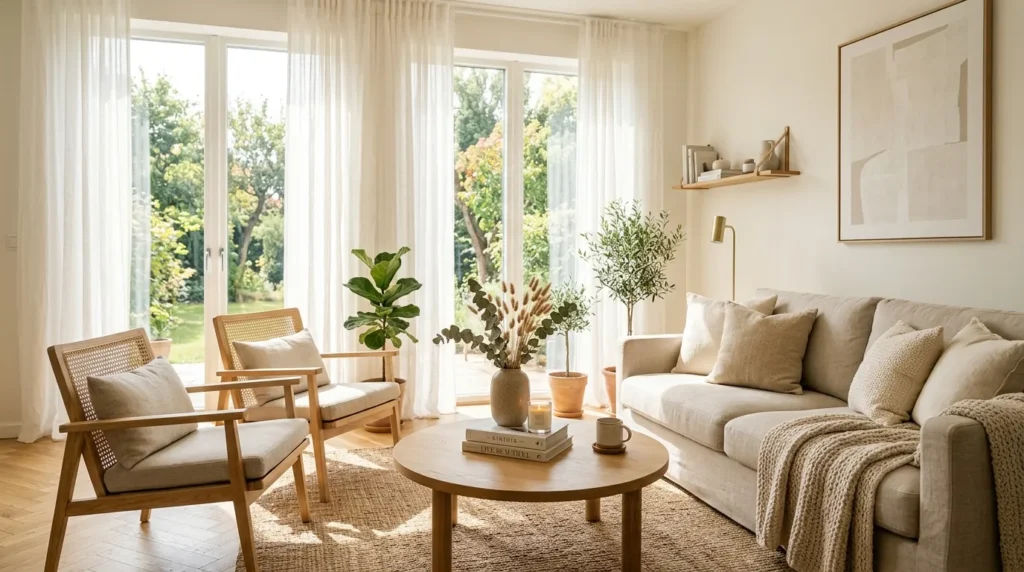
Natural light is one of the most effective ways to make a small living room appear larger. Bright spaces feel more open because sunlight reduces visual heaviness and highlights architectural details.
I’ve found that maximizing windows and allowing daylight to flow through the room creates an instant feeling of spaciousness.
How To Style It
Use sheer curtains, keep window areas uncluttered, choose light fabrics, and place mirrors strategically to reflect sunlight throughout the room.
8. Choose Furniture With Visible Legs
Quick Benefits
- Creates an airy look
- Makes floors more visible
- Improves visual flow
- Adds modern style
- Prevents heaviness
Why It Works
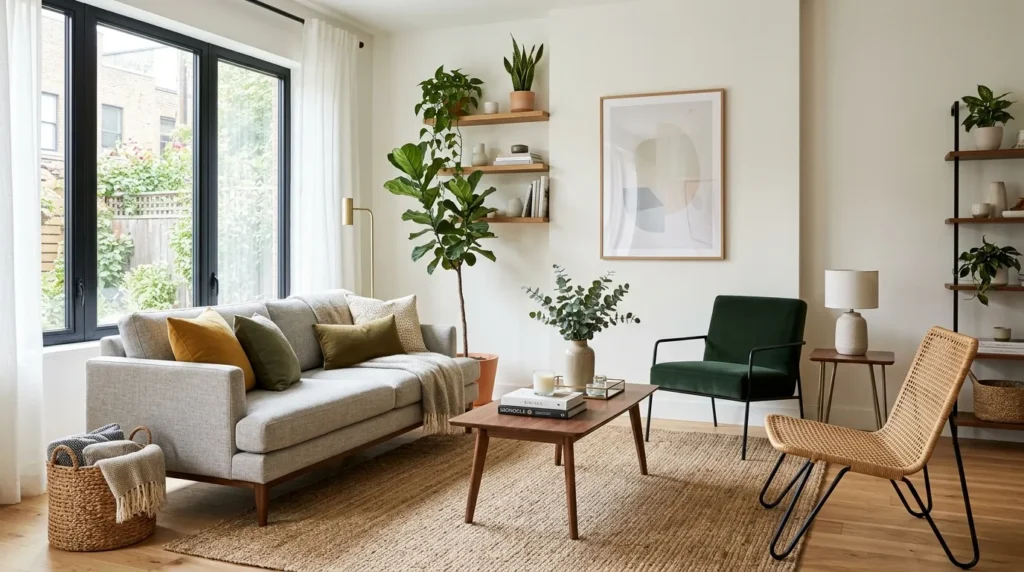
Furniture raised off the floor creates more visible space underneath, making the room appear larger and less crowded. Sofas, chairs, and tables with exposed legs create a lighter visual footprint.
I’ve found that elevated furniture designs work especially well in apartments and compact living rooms.
How To Style It
Choose sofas with slim legs, wooden coffee tables, open-frame chairs, and minimalist side tables. Avoid bulky furniture that sits directly on the floor.
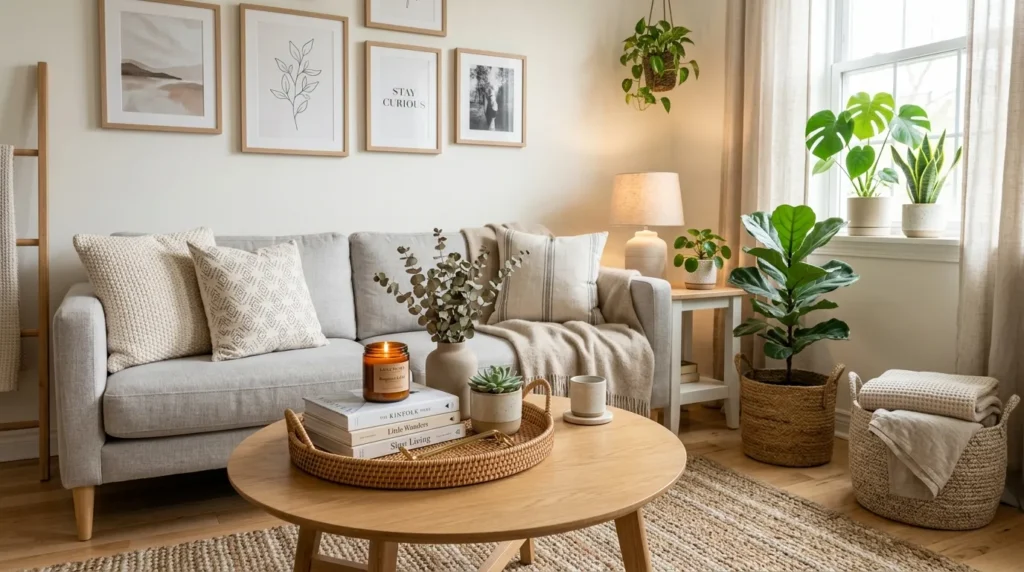
9. Keep Décor Simple and Intentional
Quick Benefits
- Reduces visual clutter
- Makes spaces feel larger
- Highlights favorite pieces
- Creates a clean look
- Easier maintenance
Why It Works
Small living rooms benefit from thoughtful simplicity. Too many accessories, patterns, and decorations can make the room feel busy and smaller than it is.
I’ve found that carefully selected décor creates more impact than filling every available surface.
How To Style It
Display a few meaningful pieces such as artwork, candles, books, plants, and decorative objects. Use trays and baskets to keep smaller items organized.
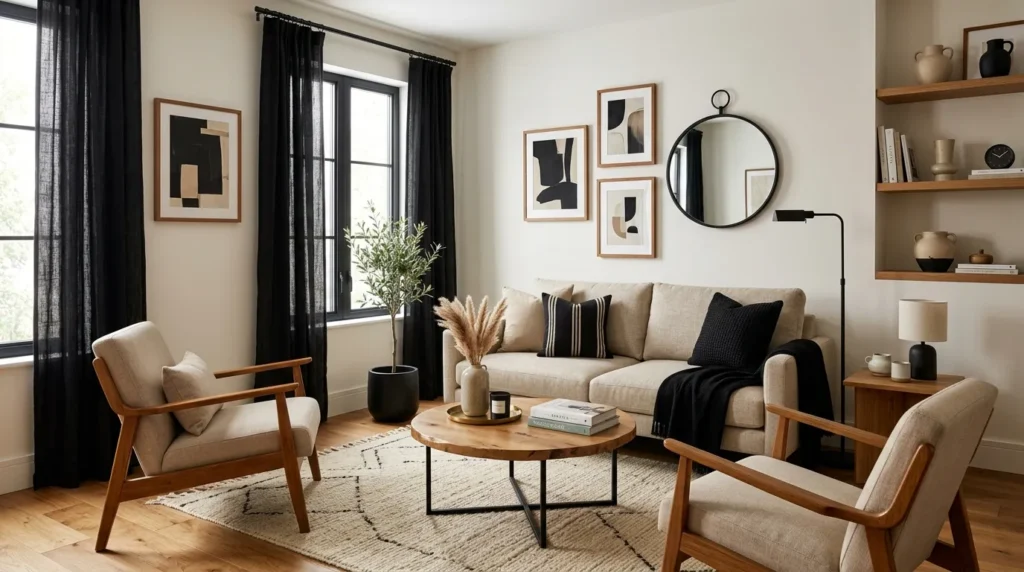
10. Add Consistent Design Elements
Quick Benefits
- Creates visual harmony
- Improves flow
- Makes the room feel intentional
- Enhances style
- Creates a designer appearance
Why It Works
Consistency helps small living rooms feel connected and organized. When colors, materials, and textures repeat throughout the space, the room feels larger because the eye moves smoothly from one area to another.
I’ve found that repeating design elements is one of the easiest ways to create a professional-looking interior.
How To Style It
Repeat similar tones and materials through furniture, rugs, pillows, curtains, and décor. For example, combine warm wood, beige textiles, and black accents throughout the room.
Frequently Asked Questions
How can I make a small living room look bigger?
Use light colors, mirrors, smart furniture layouts, multifunctional pieces, and minimal décor to create a more open feeling.
What furniture works best for a small living room?
Compact sofas, slim chairs, nesting tables, storage ottomans, and furniture with visible legs work well in smaller spaces.
Should small living rooms have dark colors?
Dark colors can work, but using them strategically is best. Light neutral shades usually create a brighter and more spacious appearance.
How do I arrange furniture in a small living room?
Create clear pathways, avoid blocking windows, and arrange furniture around a central conversation area.
What décor makes a small room feel larger?
Mirrors, vertical shelving, light textiles, plants, and simple artwork help create the illusion of more space.
Conclusion
Making a small living room feel bigger is about creating balance between comfort, functionality, and visual openness. The right combination of light colors, smart furniture, natural lighting, and intentional décor can completely transform how your space feels.
A small room does not have to feel limited. With thoughtful design choices, you can create a living area that feels spacious, stylish, and welcoming while still reflecting your personal taste.
The most beautiful small living rooms focus on quality over quantity. By choosing pieces that serve a purpose and maintaining a cohesive design, you can create a home that feels comfortable and effortlessly elegant.
Related Articles
- 10 Small Living Room Ideas That Look Cozy All Year
- 10 Modern Living Room Ideas with Elegant Lighting
- 10 Bathroom Decor Ideas That Add Hotel Style
- 10 Modern Bedroom Ideas You’ll Love Coming Home To
- How to Decorate a Bedroom with Affordable Decor