How High Above the Window Frame Should You Hang a Curtain Rod?
Deciding how high above the window frame should you hang a curtain rod is a fundamental interior design choice that dictates the character of a room. Many homeowners default to mounting hardware directly onto the window trim, but this often makes ceilings appear lower and windows feel constricted. By elevating your window treatment, you can significantly alter the visual proportions of your space.
Understanding the relationship between your wall space and drapery placement allows you to create a more polished, professional look. This article explores the precise measurements and tactical considerations required to achieve an ideal aesthetic, ensuring your window treatments enhance rather than detract from your home’s architecture.
The Standard Rule for Mounting Height
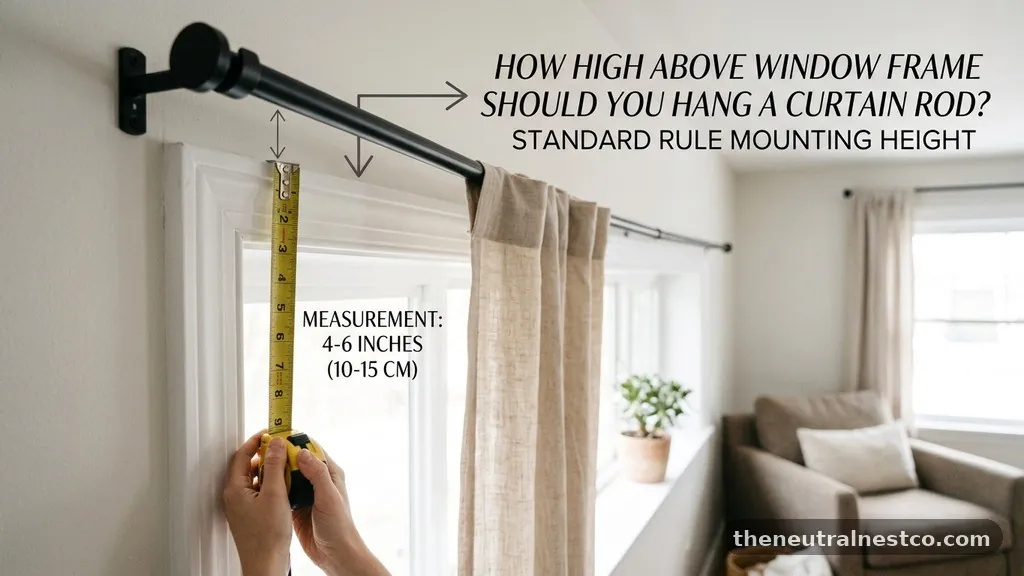
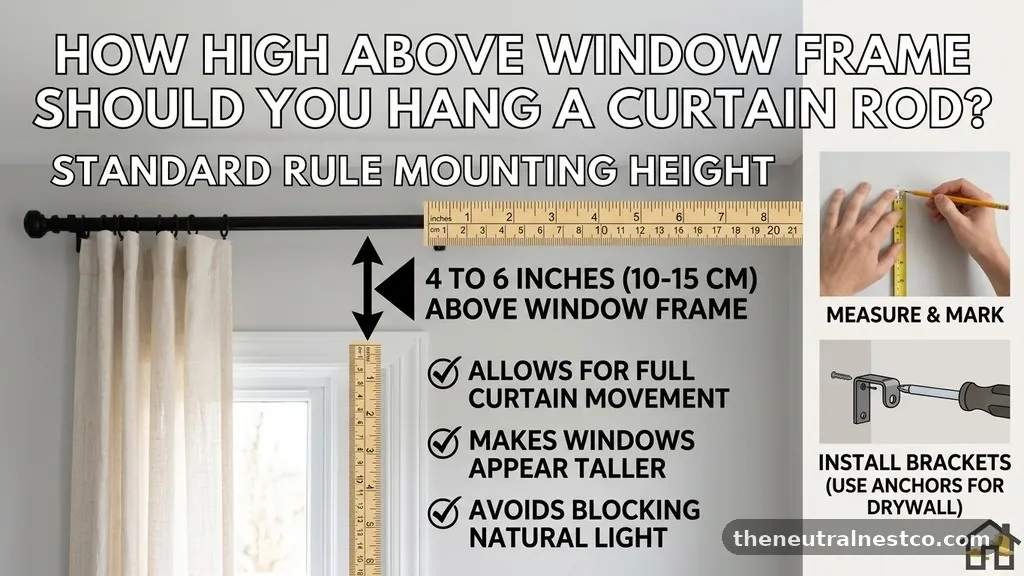
The most widely accepted professional standard for mounting a curtain rod is to place it between 4 to 6 inches above the top of the window frame. If you have enough wall space, pushing this measurement toward the higher end of that range often yields the best results.
By mounting the rod significantly above the casing, you draw the eye upward, which creates the illusion of taller walls. This technique is particularly effective in rooms with standard 8-foot ceilings, where maximizing vertical space is essential.
When you mount the rod closer to the ceiling rather than just above the trim, you achieve a more modern, architectural look. For rooms with higher ceilings, such as 9-foot or 10-foot heights, you might even consider mounting the rod halfway between the top of the window frame and the ceiling.
This creates a sense of grandeur and allows the drapery panels to frame the window as a tall, elegant feature. Always ensure that your chosen height allows the curtains to graze the floor or hover just slightly above it for a crisp finish.
Visual Impact and Room Proportions
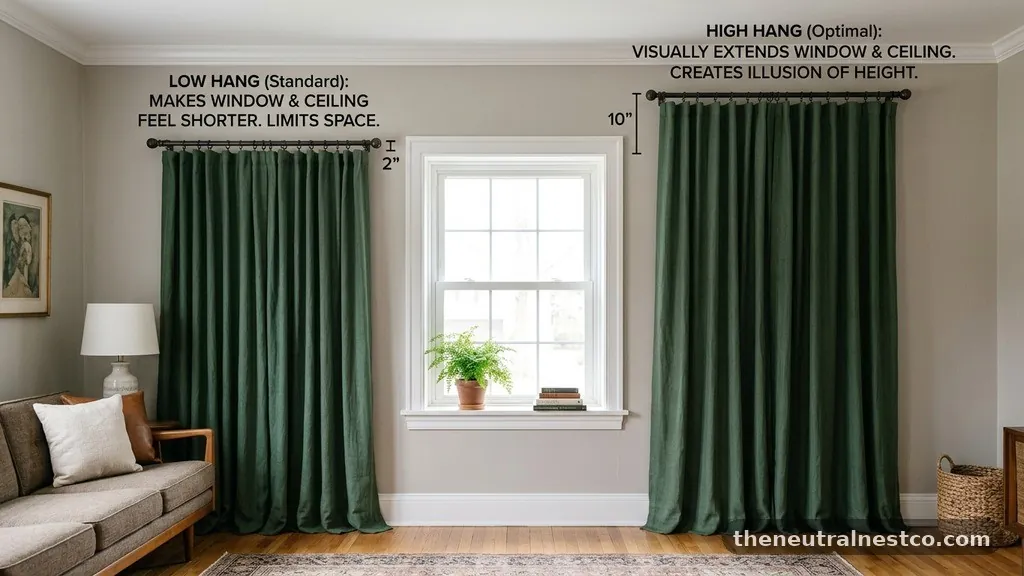
The height at which you choose to hang your rod fundamentally changes how a room feels. Low-mounted curtains tend to break up the wall plane, effectively chopping the room into horizontal segments that can make it feel smaller.
Conversely, high-mounted curtains create a continuous vertical line from the ceiling to the floor. This flow is the secret to achieving a formal aesthetic, as it mimics the look of custom-tailored drapery often found in high-end design projects.
Consider the relationship between the rod height and the window casing itself. If your window frame is particularly thick or ornate, mounting the rod too close to it can look cluttered. Moving the rod higher provides a “breathing room” that highlights the window architecture without overwhelming it.
This approach works exceptionally well in smaller rooms where you want to avoid visual noise. By extending the vertical line, you trick the eye into perceiving the room as more spacious and airy than it actually is.
Determining the Ideal Mounting Height
When planning your layout, you must account for both the window trim and the available wall space. Start by measuring the distance from the top of your window frame to the ceiling.
If that distance is less than 6 inches, you have limited room to maneuver, and you should likely aim for the highest point that still allows the rod brackets to be securely mounted. If you have a large gap, you can be more flexible, but avoid mounting the rod so high that the curtains look like they are floating disconnected from the window.
You should also factor in the type of window treatment you are using. Grommet-top curtains have a header above the rod, which means the fabric starts slightly higher than the rod itself.
If you hang your rod at 6 inches above the frame, the top of the fabric might actually sit 8 or 9 inches above the window. Account for this “header rise” to ensure you don’t inadvertently cover too much of your wall or ceiling molding.
The Role of Curtain Bracket Projection
Bracket projection is the distance the rod extends from the wall. This is critical because it determines how well your curtains will hang when closed. If you have deep window sills or thick trim, you need a bracket with a deeper projection to ensure the fabric hangs straight down without catching on the frame.
A standard projection is usually around 3 to 4 inches, but adjustable brackets can offer more flexibility. Always check the clearance before drilling into your wall, as the projection will influence how much light enters the room when the curtains are fully drawn.
Measuring for Success
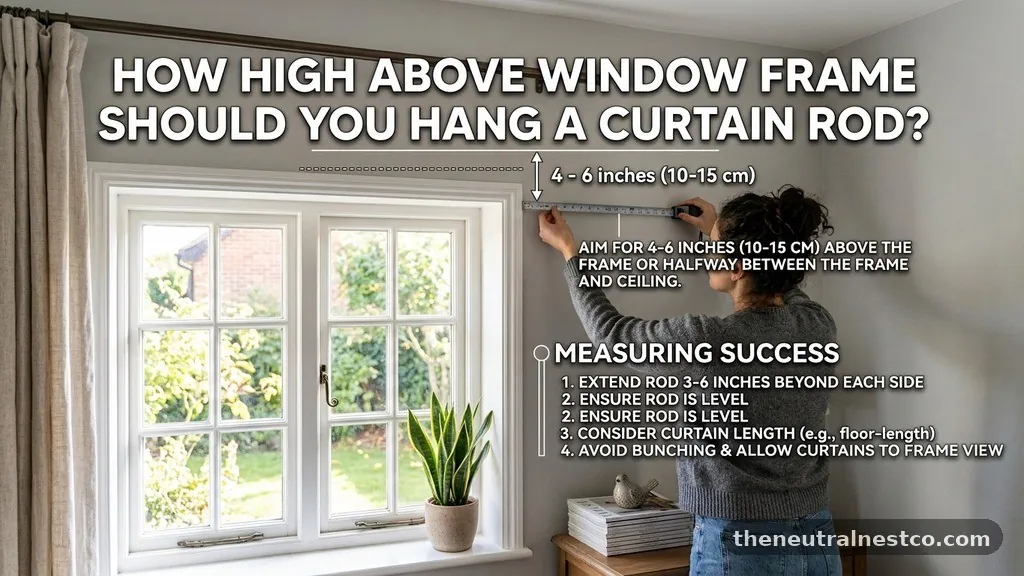
Precision is the most important factor when installing window hardware. Before you drill a single hole, use a high-quality leveling tool to mark your desired height across the entire width of the window.
Even a slight tilt can be magnified by long, flowing drapes, making the entire installation look amateurish. Measure from the floor to the rod position at both ends to ensure the rod is perfectly parallel to the floor, regardless of whether your window frame itself is perfectly level.
It is also helpful to test the visual impact before committing to the final holes. You can use painter’s tape to mark the proposed rod location and hang a piece of fabric or a spare curtain panel to see how it looks from across the room.
This simple step often reveals that a higher or lower placement would have been more effective. Taking the time to verify your measurements prevents unnecessary damage to your walls and ensures a professional finish on the first attempt.
Avoiding Common Installation Pitfalls
Many DIY installers make the mistake of mounting rods too narrow, which restricts light and makes the window appear smaller. A good rule of thumb is to extend the rod 6 to 10 inches beyond the window frame on each side.
This allows the curtains to stack back onto the wall rather than covering the glass, maximizing the amount of natural light entering the room. Overlooking this width adjustment is just as detrimental to the final look as choosing the wrong height.
Another common issue is failing to use the correct wall anchors. Curtains and rods can be surprisingly heavy, especially when you use velvet or lined fabrics. If you screw the brackets into drywall without proper support, the weight of the drapes will eventually pull the screws loose, causing the rod to sag.
Always use heavy-duty drywall anchors if you cannot locate a wall stud. This ensures the structural integrity of your installation and prevents the hardware from pulling away from the wall over time.
Comparing Installation Methods
| Factor | Standard Mounting | High/Ceiling Mounting |
|---|---|---|
| Height above Frame | 2–4 inches | 6+ inches (or at ceiling) |
| Visual Effect | Cozy, traditional | Dramatic, spacious |
| Ceiling Height | Best for low ceilings | Best for 9ft+ ceilings |
| Light Exposure | Partial obstruction | Maximum clearance |
Working with Floor-to-Ceiling Curtains
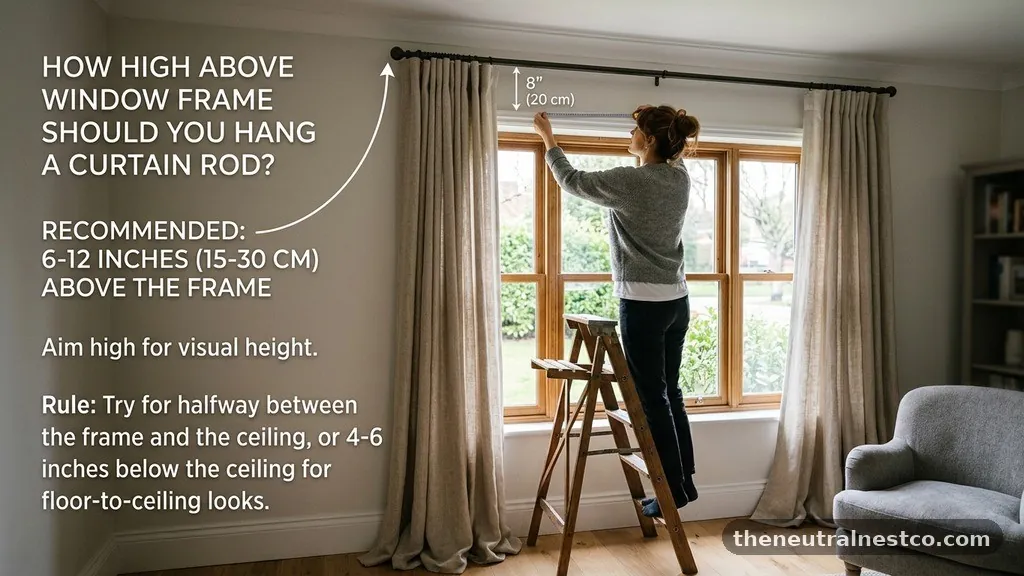
Floor-to-ceiling curtains are a popular design choice that adds a sense of luxury to any room. When implementing this style, you do not necessarily need to mount the rod directly against the ceiling, though you certainly can.
Mounting the rod just a few inches below the ceiling line creates a seamless transition that emphasizes the height of the room. The goal here is to minimize the amount of wall visible between the rod and the ceiling, allowing the fabric to dominate the vertical space.
For this look to succeed, the fabric drop must be perfect. The curtains should either touch the floor exactly or feature a slight “break,” where a small amount of fabric pools on the floor.
If the curtains are even half an inch too short, the entire effect is ruined. Because you are dealing with such long panels, ensure that your rod is sturdy enough to support the extra weight of the increased fabric length.
Selecting the Right Mounting Hardware
The hardware you choose is just as important as the placement itself. When deciding how high above the window frame should you hang a curtain rod, consider the size of the brackets.
Heavy-duty brackets are essential for long rods that span multiple windows or support blackout curtains. If you are using a double rod system—perhaps one for sheers and one for heavier drapes—you will need brackets with a much larger projection to accommodate both layers of fabric.
Select materials that complement your room’s existing metal finishes, such as brass, matte black, or brushed nickel. The brackets should be visually consistent with the rod diameter.
A thin, delicate rod might look out of place with massive, industrial-style brackets, while a heavy wooden pole requires substantial support. Always test the hardware’s slide action; if the rings or curtains catch on the brackets, the entire experience of using the window treatment will be frustrating.
The Impact of Window Trim and Casing
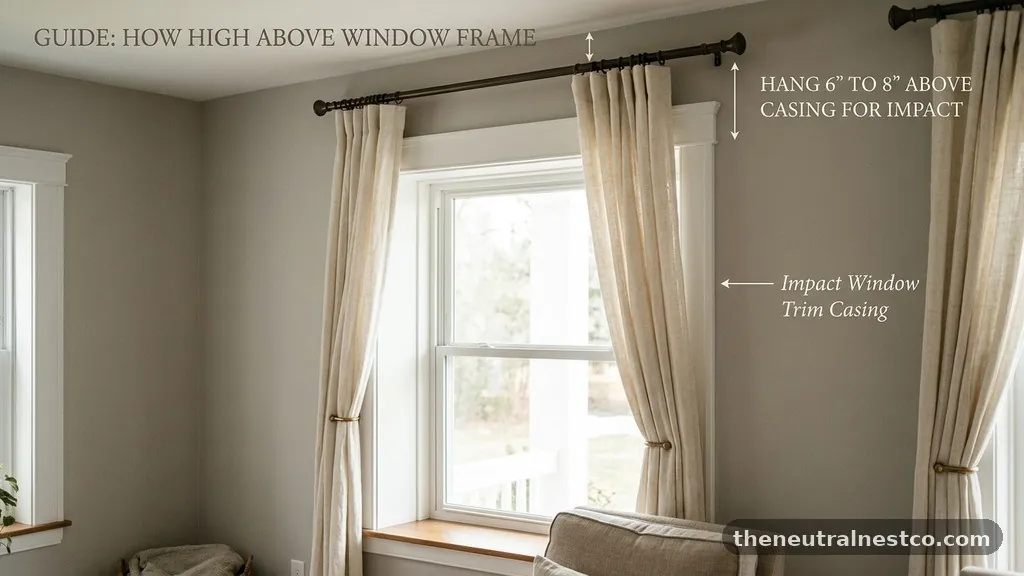
Window trim dictates how much flexibility you have with your mounting height. If you have elaborate molding, you might choose to mount the rod slightly above the trim to showcase the architecture.
In contrast, if your windows have no trim at all, mounting the rod high is almost always the best choice to give the window a more defined, finished look. The trim acts as a frame, and your rod acts as an extension of that frame.
If you are dealing with uneven window frames or non-standard shapes, prioritize a level rod over aligning with the window trim itself. A perfectly horizontal rod will often hide the fact that a window is slightly off-kilter.
When in doubt, let the level be your guide rather than the window casing. This ensures that the overall aesthetic remains clean and intentional, even if the building itself has minor structural quirks.
Managing Light and Privacy
Mounting height also affects the functional performance of your curtains. If you are trying to block out light for better sleep, mounting the rod higher and wider than the window frame is essential.
This minimizes the gaps where light can leak through the edges of the curtains. Using a wrap-around curtain rod, which curves back toward the wall at the ends, can further improve light control by keeping the fabric tight against the wall.
Privacy is another factor that benefits from a wider, higher installation. When curtains extend well beyond the window frame, they provide better coverage when closed.
This is especially important in bedrooms or bathrooms where privacy is a top priority. By thinking about how the curtains function, you can determine the best height and width to ensure your window treatments are as practical as they are decorative.
Frequently Asked Questions
Is it okay to hang curtains higher than the window frame?
Yes, it is not only okay but encouraged. Hanging curtains higher than the window frame is a professional interior design technique used to make windows appear larger and ceilings feel taller.
How do I know if my curtain rod is too low?
If your rod is mounted directly on the window trim or just an inch or two above it, it may be making your room feel shorter. If you notice that your curtains look cramped or the room lacks a sense of vertical flow, moving the rod higher will likely improve the appearance.
Do I need to worry about the rod covering the window?
You should aim to have the curtain panels stack on the wall space to the sides of the window when they are open. If your rod is too short, the curtains will cover the edges of the glass, blocking natural light. Extending the rod 6 to 10 inches beyond the frame on each side solves this.
Can I mount a curtain rod on the ceiling?
Yes, ceiling-mounted tracks or rods are a sleek option, especially for floor-to-ceiling drapery. This is a great choice if you have very little wall space above your windows or if you want a modern, minimalist look.
How do I fix holes in the wall if I move my rod?
If you decide to move your rod higher, you can easily patch old holes using a small amount of spackle and a putty knife. Once dry, sand the area smooth and touch it up with wall paint. For larger holes or plaster walls, use a mesh patch before applying the spackle for a more durable repair.
Conclusion
Determining how high above the window frame should you hang a curtain rod is a simple adjustment that yields a significant impact on your home’s interior. By moving beyond the default placement directly on the trim, you can create a more sophisticated, spacious, and intentional environment. Remember that the goal is to enhance the vertical lines of your room, allowing your window treatments to frame the view rather than constrict it.
Start by measuring your space and testing your preferred height with painter’s tape to ensure the look suits your specific architecture. Whether you choose the standard 4-to-6-inch lift or go for a dramatic floor-to-ceiling installation, the key is precision and balance.
With your hardware securely anchored and your measurements verified, your windows will finally reflect the polished aesthetic you desire. Feel free to experiment with these techniques in different rooms to see how varied heights change the overall mood of your living space.