How Much Window Casing Clearance Is Needed for Folding Shutter Panels?
Determining how much window casing clearance is needed for folding shutter panels is a critical step in ensuring your window treatments operate without binding or scraping against the surrounding architecture. Most professional installers recommend a minimum clearance of 2 to 3 inches of flat surface area around the window opening if you intend to mount the shutters outside the casing.
If you are opting for an inside mount, the constraints shift to the depth of the window recess rather than the exterior clearance. Understanding these spatial requirements before you purchase or order your custom shutters will prevent significant frustration during the installation phase and ensure your panels fold open smoothly.
The Core Clearance Requirement
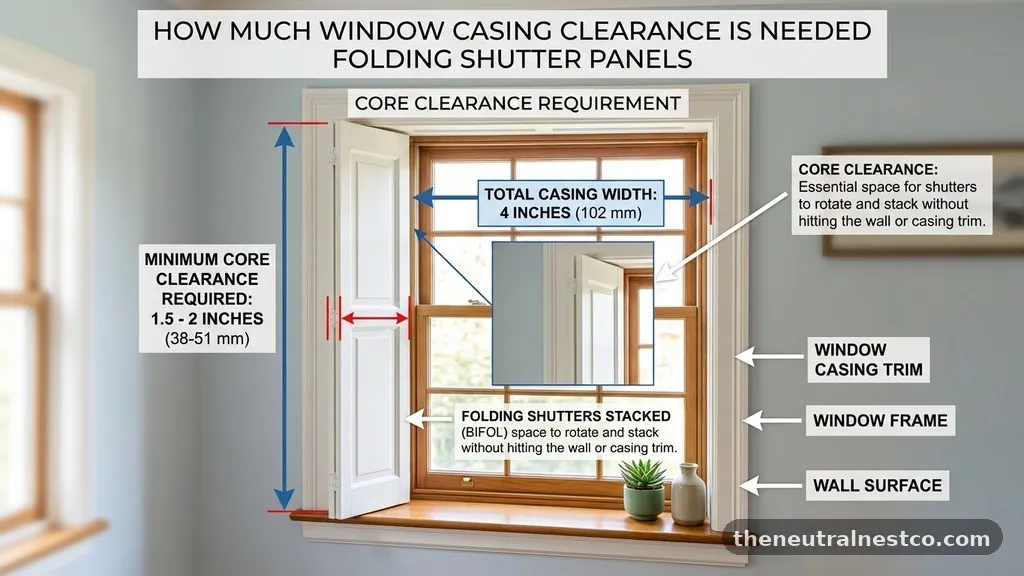
When you ask how much window casing clearance is needed for folding shutter panels, the answer usually centers on the footprint of the frame itself. Most standard shutter frames require at least 2 inches of flat, unobstructed surface outside the window opening to accommodate the frame and the hinge mechanism.
If your window molding is decorative, ornate, or particularly narrow, this clearance might not exist. In such cases, the frame will either overlap the trim unevenly or require a specialized mounting strip to create a level surface.
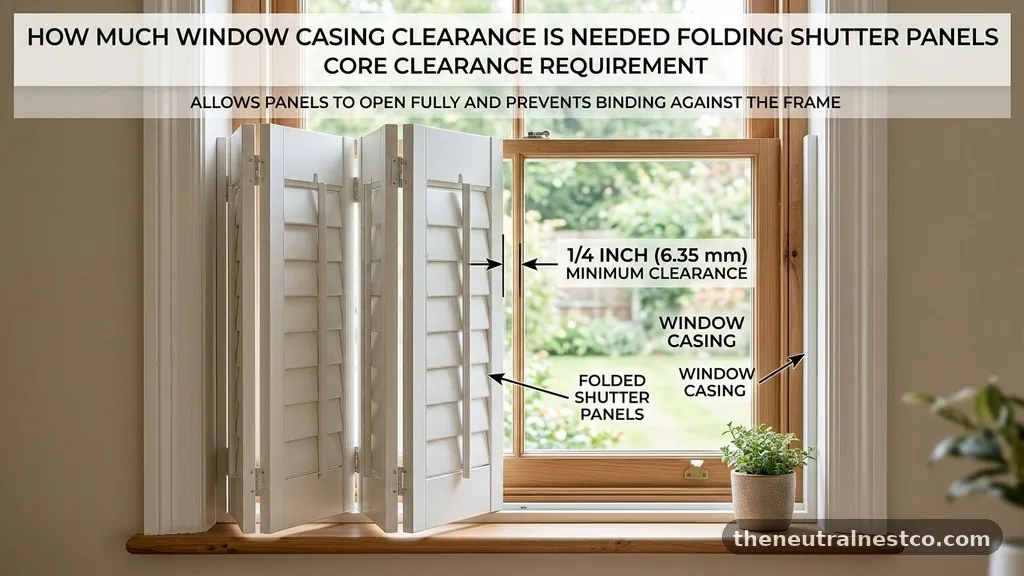
You must account for the swing of the panels as well. Folding shutters, often called bi-fold or bifold shutters, require extra room to clear the edge of the casing when they are pushed back against the wall.
If you have light switches, electrical outlets, or picture frames positioned too close to the window, these will act as obstructions. Always measure the total distance from the edge of the window opening to the nearest wall feature to ensure you have enough room for the panels to rest in the fully open position.
Inside Mount vs. Outside Mount
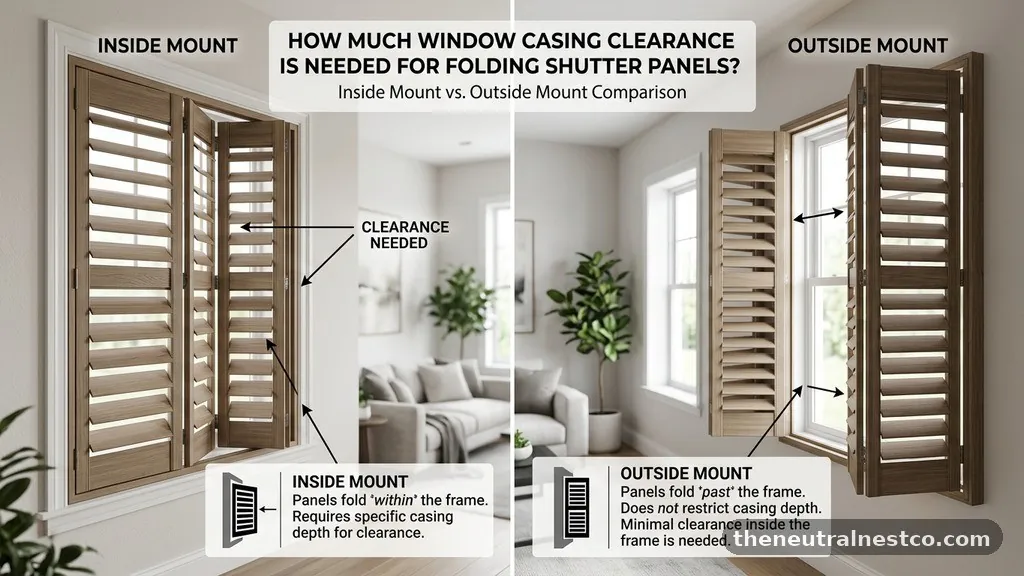
The distinction between an inside mount and an outside mount is the most significant factor in your clearance calculation. An inside mount fits the shutter frame directly within the window casing, requiring zero exterior clearance but demanding significant internal depth.
You generally need at least 2.5 to 3 inches of depth inside the window frame to allow for the louvers to rotate without hitting the glass. If your window is too shallow, an inside mount will result in the shutters protruding past the wall, which often looks unfinished.
An outside mount, conversely, sits on the wall or the face of the trim. This method is often chosen when the window recess is too shallow or when you want the shutters to appear larger than the actual window opening. For an outside mount, the clearance requirement is strictly about the wall space surrounding the window.
You need a flat, level surface that allows the frame to sit flush against the wall. If the wall is textured or curved, you may need to use shims or a custom-built frame to ensure the shutter operates correctly.
Measuring Your Window for Success
Before you finalize any order, you must measure your window in at least three places for both the width and the height. Windows are rarely perfectly square, and even a slight deviation can cause folding panels to bind or leave unsightly gaps.
Use a high-quality steel tape measure rather than a cloth one to avoid stretching errors. If you find that the top, middle, and bottom measurements differ by more than 1/4 inch, you must account for this in your frame selection.
When determining how much window casing clearance is needed for folding shutter panels, keep a detailed log of these three measurements. If you are mounting on the wall, measure from the outside edge of the window casing to the nearest obstacle on all four sides.
It is helpful to take a photo of your window area to reference later when consulting with a manufacturer. This visual aid will help the supplier identify if your specific molding profile will interfere with the shutter hinges or the folding mechanism.
Accounting for Decorative Molding
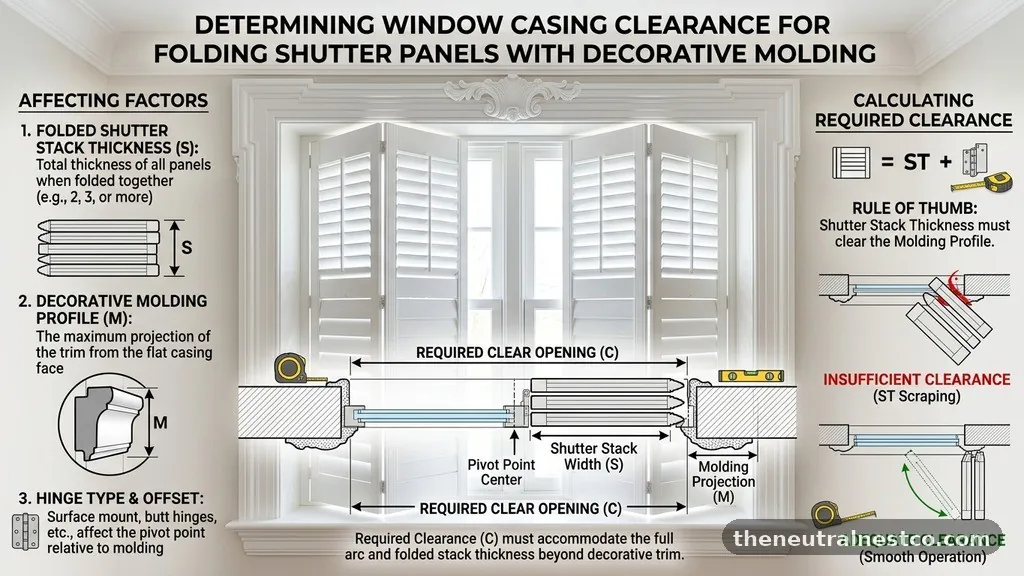
Decorative molding, or trim, often complicates the installation of folding shutter panels. If your window has heavy, protruding crown molding or detailed chair rails, the standard frame depth might be insufficient to clear these features.
You might need to order a frame with a wider “casing stop” or a deeper projection to move the shutters out far enough to bypass the trim. This adds to the cost and complexity of the project but is necessary for a clean, professional aesthetic.
Some installers use a “build-out” or “furring strip” to create a flat mounting surface if the existing molding is too irregular. This involves attaching a flat piece of wood to the wall that matches the depth of your existing trim.
By doing this, you create a dedicated, level plane for the shutter frame to attach to. While this requires extra labor, it ensures that your folding panels won’t snag on the edges of your decorative window frame.
The Impact of Window Depth
The physical depth of your window cavity plays a role in how the panels fold back. If you have a deep window, the panels might be able to fold inside the recess entirely, saving you from needing extra wall clearance.
However, if the panels are wider than the depth of the window, they will necessarily stick out into the room. You must calculate the width of each panel to see if they will fold flush against the wall or if they will remain at an angle.
Use the following table to estimate the space requirements for common shutter configurations based on panel width and depth:
| Panel Type | Min. Inside Depth Required | Wall Clearance Needed |
|---|---|---|
| Standard Bifold | 2.0 Inches | 2.5 Inches |
| Narrow Bifold | 1.5 Inches | 2.0 Inches |
| Heavy Duty/Solid | 3.0 Inches | 3.5 Inches |
| Decorative Trim Mount | N/A | 4.0 Inches |
Managing Obstructions Around the Window
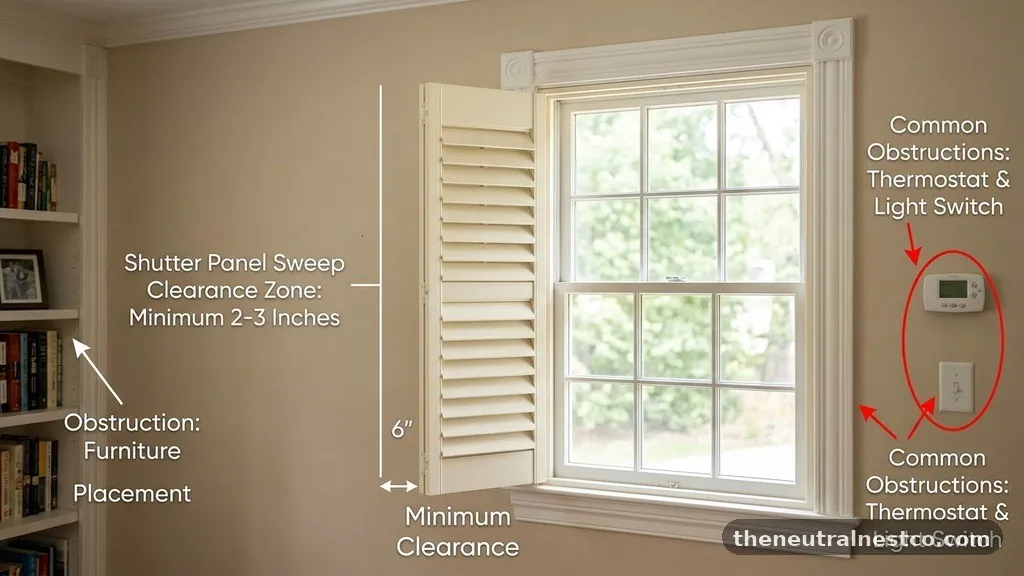
Identifying potential obstructions is a vital part of the planning process for your window treatments. Common items that interfere with folding shutter panels include curtain rod brackets, alarm sensors, and window cranks.
If you have a casement window that cranks outward, you must ensure the shutter frame does not block the range of motion for the handle. Sometimes, this means mounting the shutter slightly further away from the window frame than you originally planned.
Create a checklist of these items before you commit to a specific design. If an obstruction cannot be moved, you may need to reconsider your shutter style.
For example, a single-panel shutter that hinges to the side might require less clearance than a multi-panel bifold system. Always prioritize the functionality of your window and its hardware over the aesthetic preference for a specific type of folding panel.
Choosing the Right Frame Style
The frame style you choose will dictate how much window casing clearance is needed for folding shutter panels. L-frames are the most common choice for inside mounts, as they provide a clean, minimal look.
If you are doing an outside mount, a Z-frame or a decorative frame with a built-in trim edge might be more appropriate. Each frame style has a different “footprint” on the wall, which directly impacts the required clearance.
When you are reviewing manufacturer specifications, look for the “frame projection” figure. This number tells you exactly how far the frame will extend from the wall or the window casing.
If your frame projection is 1.5 inches, you need at least that much clearance plus a small margin for error. Don’t forget to account for the thickness of the hinge itself, as these often protrude slightly beyond the frame edge.
Precision in the Manufacturing Process
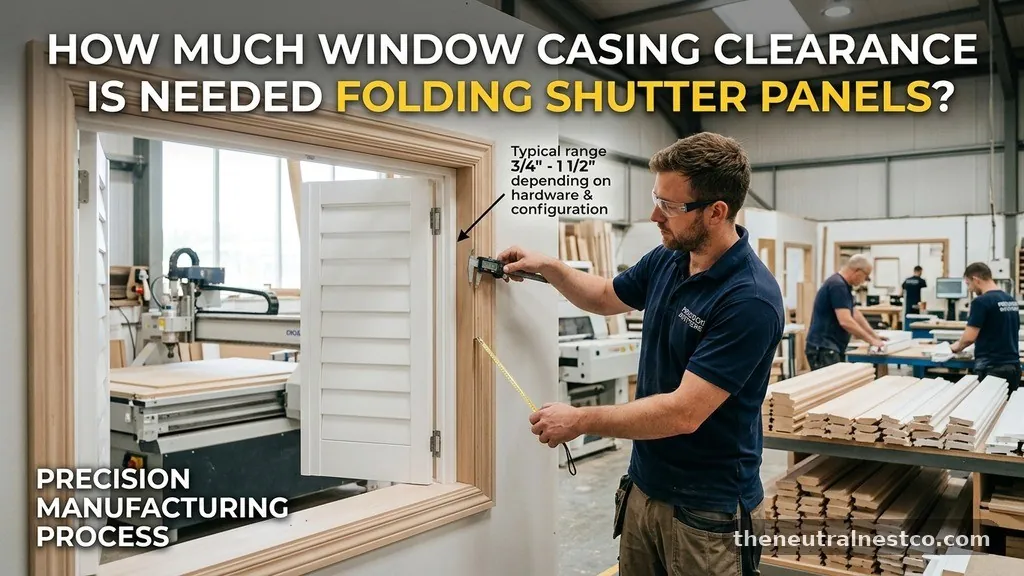
The manufacturing process for high-quality custom shutters involves precise CNC cutting that minimizes the need for on-site adjustments. When you provide your measurements, the manufacturer will typically subtract a small fraction of an inch to ensure the panels operate smoothly.
If you measure too tightly, the panels may rub against the frame or the wall, causing wear and tear over time. Always err on the side of providing accurate, slightly generous measurements to allow for the natural expansion and contraction of wood or composite materials.
If you are buying from a big-box store, be aware that their “off-the-shelf” sizes are standardized and may not account for your specific wall conditions. Custom manufacturers are generally more accommodating when it comes to specific clearance needs. They can often provide specialized frames that are designed to bridge the gap between your window casing and the wall, ensuring a seamless fit that a mass-produced product simply cannot match.
Common Installation Challenges
Even with perfect measurements, you might encounter issues during installation. The most common problem is a wall that is not perfectly plumb, which can cause the shutter panels to swing open or closed on their own.
You can fix this by using shims behind the frame to pull it into a perfectly vertical alignment. Another issue is the weight of the panels; if they are heavy, they can pull on the frame and cause the hinges to sag over time.
To prevent sagging, use heavy-duty screws that anchor deep into the wall studs rather than just into the drywall or the window casing. If you are mounting onto concrete or brick, you will need specialized masonry anchors to ensure the frame stays secure. A stable, solid mounting point is just as important as the clearance itself, as a loose frame will eventually lead to binding and improper alignment of the folding panels.
FAQ
Do I need to leave extra clearance if I have window handles?
Yes, you must account for any hardware that protrudes from the window surface. If your handle sticks out 1 inch, your shutter panels must either be cut to clear that space or the frame must be mounted with enough projection to move the entire shutter assembly past the handle. Always measure the distance from the glass to the outermost tip of the handle to be safe.
Can I install folding shutters on a window with no casing?
Yes, this is common in modern homes that use drywall returns. You can mount the shutters directly to the wall surrounding the window, which is essentially an outside mount. In this case, ensure your wall is flat and that you have at least 2 inches of surface area around the opening for the frame to anchor securely.
What if my window is not perfectly square?
Measure the window in three places and use the smallest measurement for your width and the smallest for your height. If the window is significantly out of square, you may need to use a wider frame or apply extra trim to hide the gap. Custom shutter manufacturers can often build a frame that compensates for slight variations in the wall.
Is it possible to mount shutters on a tiled bathroom wall?
Mounting on tile requires a masonry drill bit and specific anchors designed for tile or stone. You should avoid drilling into the grout lines if possible, as they are weaker than the tile itself. Ensure the frame is properly sealed with silicone caulk to prevent moisture from getting behind the shutters and damaging the wall.
How much room do the hinges need to fold properly?
Most standard hinges require about 1/2 inch of space beyond the frame to allow the panel to swing fully open. If your panels are meant to fold flat against the wall, you need to ensure the hinge placement allows for a full 180-degree rotation. If the frame is too close to a corner or an obstruction, the panels will not be able to fold back completely.
Conclusion
Determining how much window casing clearance is needed for folding shutter panels is a foundational step in your home improvement project. By ensuring you have at least 2 to 3 inches of clearance for outside mounts and checking your depth requirements for inside mounts, you set the stage for a smooth, functional installation. Always take the time to measure multiple points on your window and account for potential obstructions like handles or trim.
If you find your window area is unconventional, don’t hesitate to consult with a professional who can provide a custom frame solution. With careful planning and attention to detail, your new shutters will provide both aesthetic beauty and long-lasting utility for your home. Reach out to a local window treatment specialist if you need help verifying your measurements before finalizing your order.