Faux Wood (Composite) vs Real Basswood Shutters: High Moisture Rooms
Choosing between faux wood (composite) vs real basswood shutters for high moisture rooms often comes down to a simple trade-off between aesthetic warmth and long-term durability. While many homeowners prefer the classic look of natural timber, high-humidity environments like bathrooms and laundry areas can wreak havoc on organic materials.
Understanding the differences in how these products handle steam, heat, and condensation will help you make a choice that avoids costly replacements later. Whether you prioritize the authentic texture of wood or the resilience of engineered composites, knowing the performance thresholds of each material is essential for your home.
The Verdict on Moisture Resistance
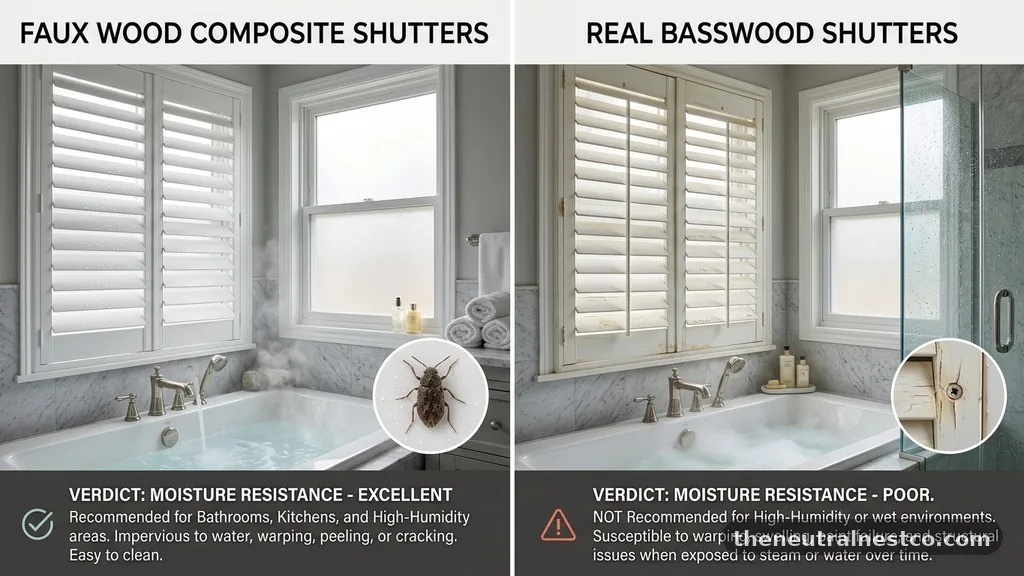
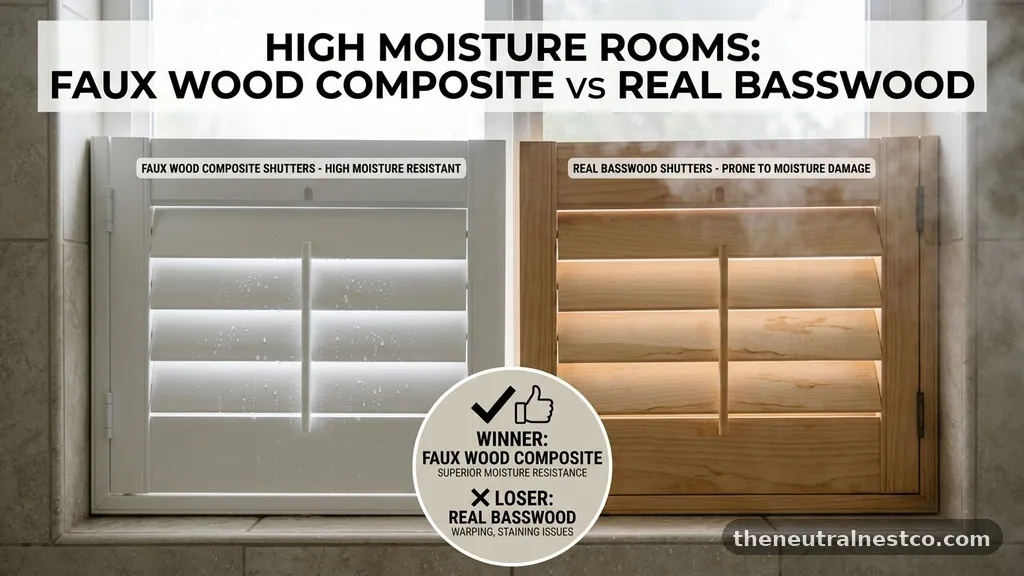
If you are dealing with a high-moisture environment, the short answer is that composite materials are the superior choice. Faux wood shutters are engineered specifically to withstand conditions that would cause real wood to warp, crack, or peel over time.
In a bathroom, where steam from a shower can linger for hours, real basswood will eventually absorb that moisture. Even with high-quality sealants and paints, the porous nature of wood makes it susceptible to swelling when exposed to fluctuating humidity levels.
Composite shutters, often made from a mix of PVC and wood fibers or solid synthetic materials, are inherently non-porous. They do not soak up moisture, meaning they will not bow or twist even in the most humid conditions.
For a room like a primary bathroom or a basement laundry area, choosing composite is a functional necessity rather than just a design preference. You get the peace of mind that your window treatments will remain square and smooth for years.
The Aesthetic Appeal of Basswood
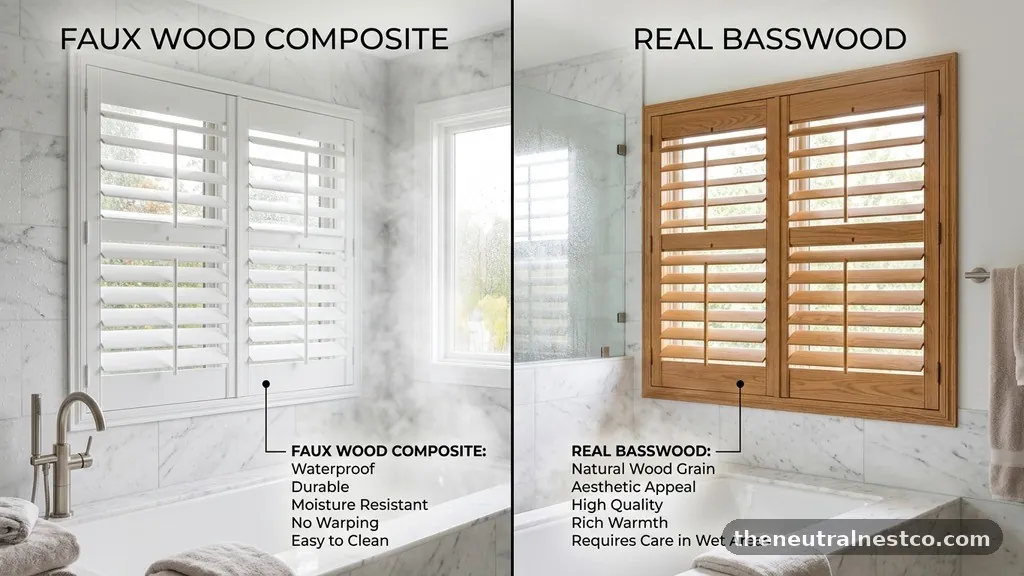
Real basswood is widely considered the gold standard for interior shutters because of its unique physical characteristics. It is a lightweight, straight-grained hardwood that accepts paint and stain exceptionally well.
When you install high-end basswood shutters, you are adding a layer of organic texture that synthetic materials struggle to replicate perfectly. The grain is tight and consistent, which prevents the wood from splintering during the manufacturing process.
Many designers prefer basswood for living rooms, bedrooms, and dining areas where the goal is to create a warm, inviting atmosphere. The material feels substantial to the touch, and the way it reflects light adds a depth that is difficult to achieve with plastic-based products.
If your home has a traditional or luxury aesthetic, basswood is the material that will best complement your interior design. However, you must be prepared to protect it from direct water exposure to maintain that beauty.
Understanding Composite Material Composition
Composite shutters are generally categorized into two types: hollow vinyl and solid composite. Hollow vinyl is the most budget-friendly option, but it can feel flimsy and may yellow when exposed to intense UV rays over several years.
Solid composite shutters, often marketed as high-performance faux wood, are much heavier and more durable. These are built to mimic the weight and feel of real timber while providing a completely moisture-proof barrier.
These materials are typically coated with a durable, UV-resistant finish that prevents fading even in windows that receive direct afternoon sun. Because they are manufactured in controlled factory environments, you can achieve a perfectly uniform finish that looks identical across every panel.
This consistency is a major advantage if you have a wide window that requires multiple shutter panels to be joined together. You will not have to worry about mismatched grain patterns or variations in how the material absorbs stain.
Performance in High Humidity Environments
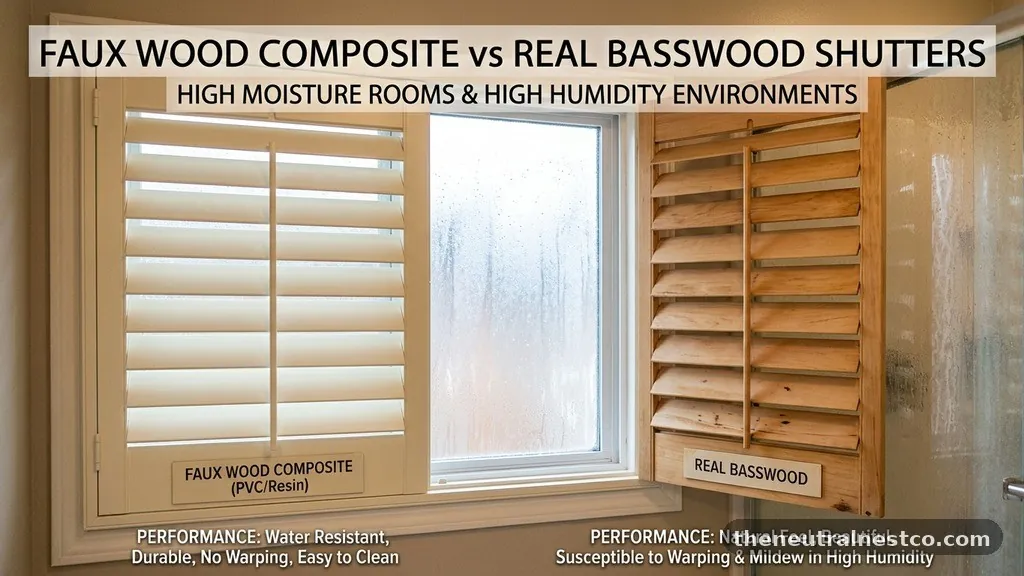
Humidity is the silent enemy of most interior window treatments. In a typical bathroom, the humidity level can spike significantly during a shower, creating a cycle of expansion and contraction for any organic material.
Real wood is hygroscopic, meaning it constantly exchanges moisture with the surrounding air. This constant movement eventually compromises the structural integrity of the paint or stain, leading to flaking and cracking.
Composite shutters, by contrast, remain inert in these conditions. They do not expand or contract, which means the tight tolerances of the shutter panels remain consistent throughout the year.
You will not experience the common issue of shutters becoming difficult to open or close as the seasons change. For a detailed overview of window treatment performance, you can review technical data from government energy resources.
Cost Comparison and Long-Term Value
When comparing the upfront price, basswood is almost always the more expensive option. Harvesting, processing, and finishing high-quality timber requires significant labor and resources, which is reflected in the final retail price.
You are paying for a natural, renewable resource that is prized for its rarity and craftsmanship. Composite shutters are generally more affordable because the production process is automated and the raw materials are less costly to source.
However, you must consider the total cost of ownership over the life of the product. If you install basswood in a high-moisture room, you might need to replace the panels within five to seven years if they begin to warp or show signs of mildew.
Composite shutters can last for decades without needing replacement, even in a damp environment. When you look at the investment over a 20-year period, the composite option often proves to be the more economical choice for bathrooms and kitchens.
Maintenance and Cleaning Requirements
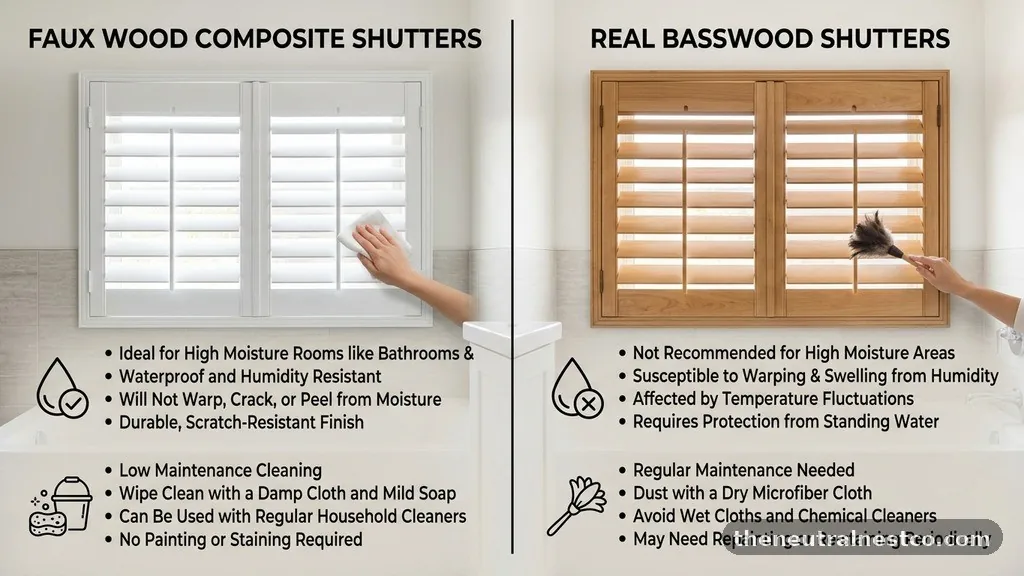
Maintenance is another area where composite shutters hold a distinct advantage. Because they are moisture-resistant, you can clean them with a damp cloth or even a mild soap solution without worrying about damaging the finish.
This is particularly useful in a kitchen where grease, cooking oils, and steam can quickly accumulate on window treatments. A simple wipe-down is usually all that is required to keep them looking like new.
Basswood requires a more delicate touch. You should avoid using water or harsh chemical cleaners, as these can strip the protective finish or seep into the wood fibers.
A dry microfiber cloth or a feather duster is the recommended method for regular cleaning. If you have a spill or a significant stain, you may be limited in how you can treat it without risking a permanent mark on the wood.
Comparing Structural Integrity
The strength of your shutter panels is vital, especially for large window openings. Real wood is incredibly strong for its weight, allowing manufacturers to create wider panels without the risk of sagging.
This is why many custom shutter companies prefer basswood for large-scale installations. If you have a massive picture window, wood offers a structural advantage that is hard to match.
Composite shutters have improved significantly in recent years, but they are still heavier than wood. Because of this weight, they often require narrower panel widths to prevent the frames from bowing over time.
If your window design requires very wide panels, you might need to add more vertical support frames if you choose composite. Always consult with your installer about the maximum width recommendations for the specific composite product you are considering.
Color and Finish Options
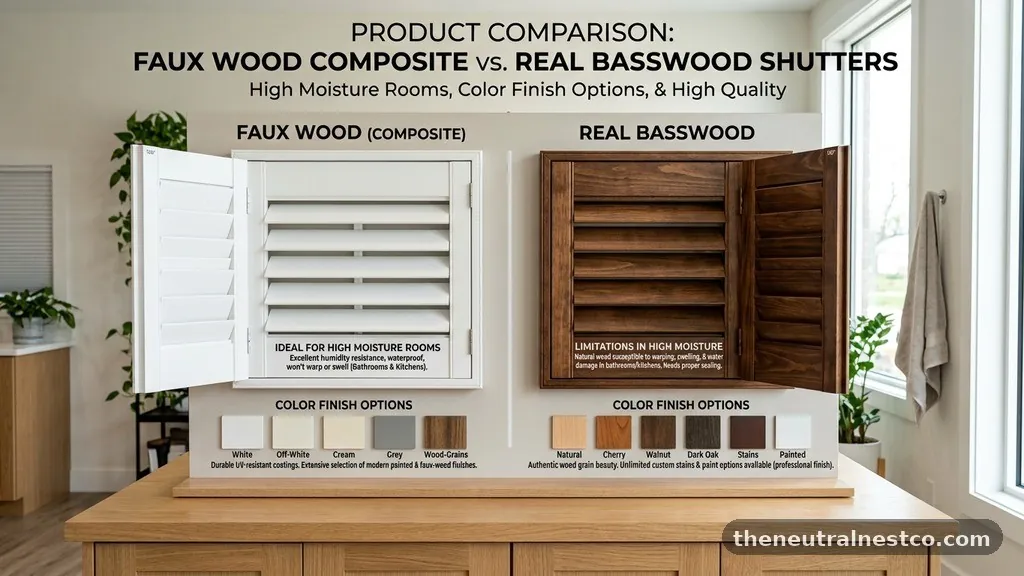
Both materials offer a wide range of color choices, but the way they hold these colors differs. Basswood can be stained to show off the natural grain of the wood, which is a look many homeowners find highly desirable.
You can match the stain to your existing hardwood floors or cabinetry for a cohesive look. However, if you want a crisp, clean white or off-white, basswood must be painted, which covers the grain entirely.
Composite shutters are almost exclusively painted or finished with a solid color. Because they are not natural wood, they cannot be stained in the traditional sense.
If you are looking for a specific wood-grain look, there are high-end composite options that feature an embossed texture, but it will never look as authentic as the real thing. If your primary goal is a clean, painted finish for a white-themed bathroom, composite is often the better choice.
Summary of Key Differences
To help you quickly visualize the trade-offs, the following table outlines the most important factors when choosing between these two materials.
| Feature | Real Basswood Shutters | Composite (Faux) Shutters |
|---|---|---|
| Moisture Resistance | Low (Requires sealing) | High (Naturally resistant) |
| Cost | Higher | Moderate |
| Durability | High (in dry rooms) | Highest (in wet rooms) |
| Weight | Lightweight | Heavy |
| Finish Options | Stain or Paint | Paint only |
Common Misconceptions
A common myth is that all faux wood shutters look like cheap plastic. While this may have been true decades ago, modern composite materials have a matte finish and a heft that is surprisingly similar to wood.
Another misconception is that basswood cannot be used in a bathroom at all. If your bathroom is well-ventilated with a strong exhaust fan, you might get away with using basswood, but it remains a risk compared to the safety of composite.
Some believe that composite is bad for the environment. While it is true that many composites are petroleum-based, they are also long-lasting, which reduces the need for frequent manufacturing and shipping of replacements.
If sustainability is your main concern, look for manufacturers who use recycled fibers in their composite blends. This allows you to get the moisture resistance you need while supporting more responsible production practices.
Frequently Asked Questions
Are shutters a good investment for home value?
Yes, high-quality custom shutters are considered a permanent fixture that adds value to your home. Unlike curtains or blinds, they are usually included in the sale of a property and are viewed as a premium window treatment.
Can I mix wood and composite shutters in the same house?
Absolutely. It is common to use basswood in the living and dining areas to maximize the aesthetic appeal, while using composite in the bathrooms and laundry rooms for durability. Just ensure the paint colors match so the exterior of the house looks uniform.
How do I know if my bathroom is too humid for wood?
If you notice condensation on your mirrors or walls after a shower, or if the room feels “heavy” with moisture for more than 30 minutes, it is likely too humid for real wood. A simple way to check is to see if your towels take a long time to dry in that room.
Do composite shutters yellow over time?
Lower-quality hollow vinyl shutters can yellow due to UV exposure. However, high-end solid composite shutters are treated with advanced UV inhibitors that prevent discoloration, keeping them bright white for many years.
Is it harder to install composite shutters because of the weight?
Yes, the weight of solid composite can make installation more labor-intensive. It is important to ensure that the window frame is structurally sound and that the mounting brackets are properly anchored to handle the additional load.
Conclusion
Choosing between faux wood (composite) vs real basswood shutters is a decision that balances your desire for natural beauty against the practical needs of your home’s environment. In high-moisture rooms, the reliability of composite materials makes them the logical choice for preventing damage and ensuring a long lifespan for your investment. Conversely, the timeless appeal of real basswood remains unmatched for living areas where moisture is not a concern.
By assessing the specific humidity levels of each room in your house, you can strategically select the right material for every window. If you are unsure about the specific climate conditions in your home, consider starting with a test installation in one room before committing to a full-house project.