
Clearview Hidden Tilt Rods vs Traditional Center Tilt Rods: Durability
When deciding between Clearview hidden tilt rods vs traditional center tilt rods: durability is often the deciding factor for homeowners. While aesthetics drive many design choices, the mechanical longevity of these components determines how long your window coverings will last.
Traditional center tilt rods have been the standard for decades, offering a proven track record, while hidden tilt systems represent a more modern, streamlined approach to shutter operation. Understanding the structural differences between these two systems ensures you make a choice that balances your visual preferences with the practical realities of daily use and long-term maintenance.
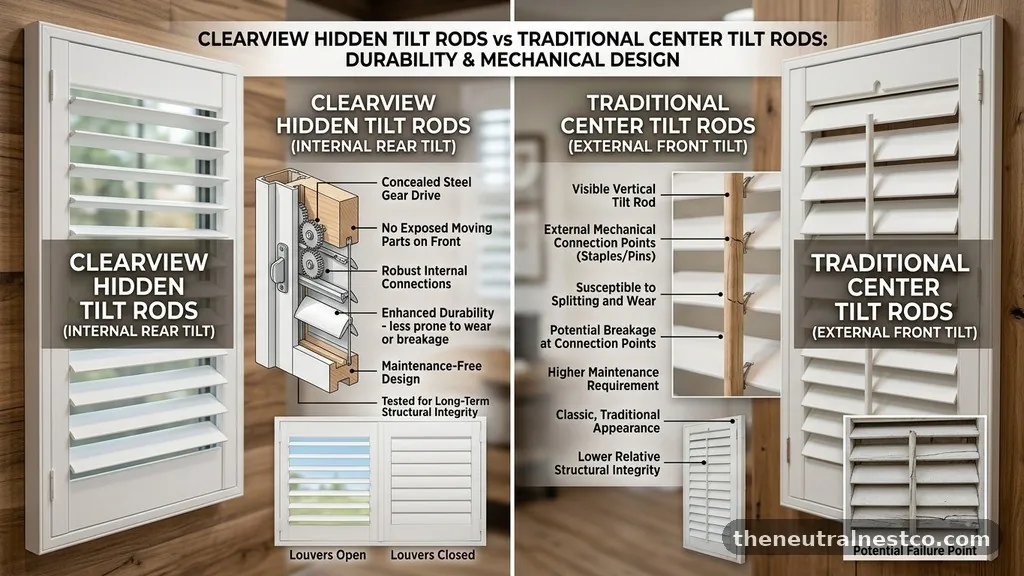
The primary difference in durability between these two systems lies in the mechanical exposure and the point of contact. A traditional center tilt rod is an external, surface-mounted piece of hardware that acts as a lever, physically connecting all louvers in a panel. Because it is exposed, it is susceptible to accidental snagging, bending, or breakage if handled roughly or caught by curtains.
In contrast, Clearview hidden tilt systems rely on an internal gear or connector mechanism concealed within the side of the shutter panel. This design eliminates the external rod entirely, removing the primary point of failure associated with traditional systems.
Mechanical Design and Structural Integrity
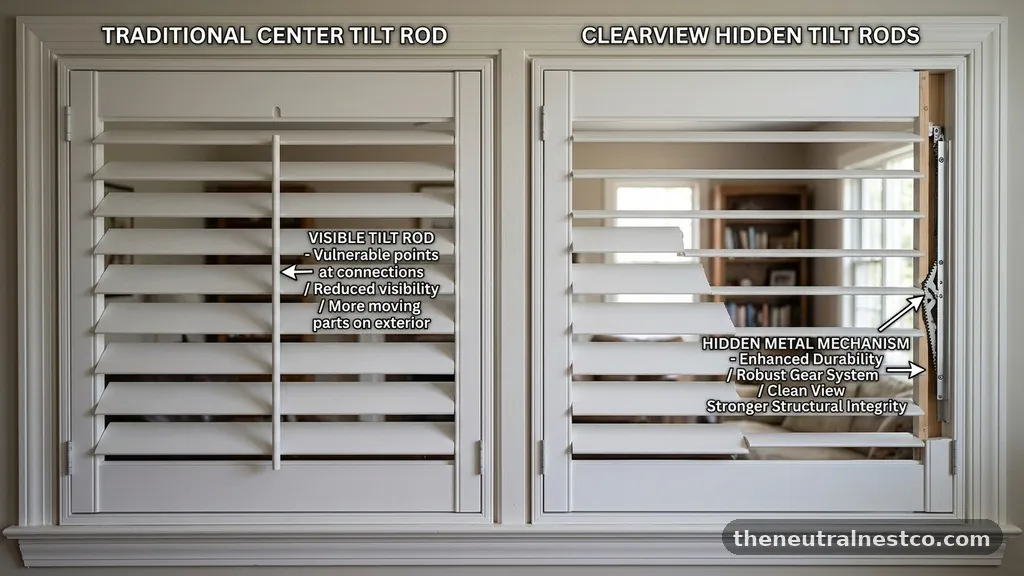
The core of the durability debate centers on how each system moves the louvers. A center tilt rod uses a series of small staples to attach the rod to each louver.
Over time, these staples can work themselves loose due to the constant tension and movement during daily operation. If a staple pulls out or the rod itself warps, the entire panel’s functionality is compromised, leading to uneven louver closure or a rod that hangs loosely against the shutter.
Hidden tilt systems, often referred to as gear-driven or internal tilt, operate differently. These systems typically utilize a metal or heavy-duty plastic bar hidden inside the rear edge of the shutter panel. When you tilt one louver, the internal mechanism moves the others in unison.
Because the components are encased within the frame, they are protected from dust, debris, and physical impact. This internal placement generally results in less mechanical wear over the life of the product, as the gears are shielded from the environment.
Impact of Exposure on Daily Wear
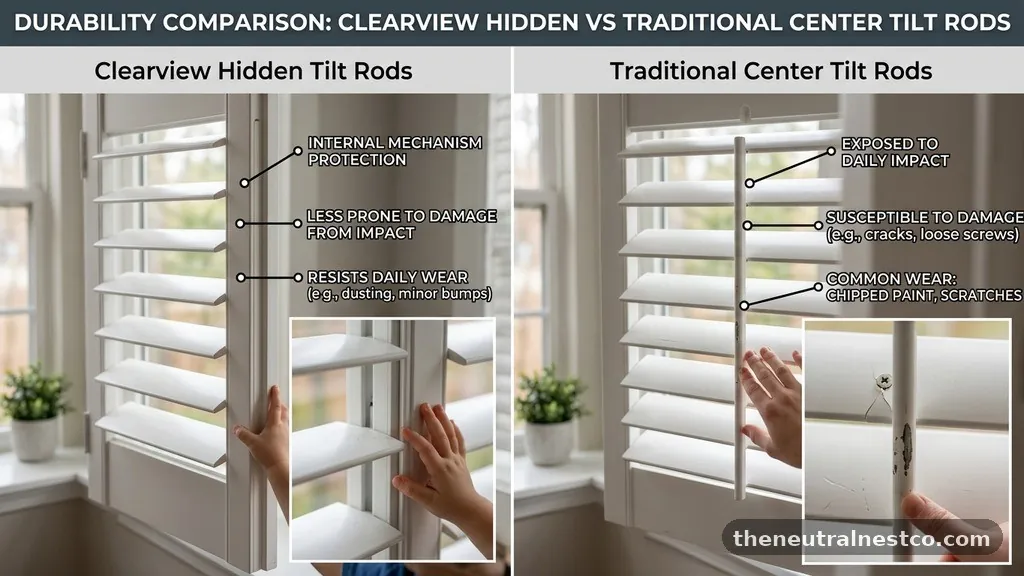
Daily usage patterns significantly influence how long shutter hardware lasts. Traditional center rods are visible and easy to grasp, which is an advantage for some users, but this visibility also makes them a target for wear.
If a household has pets or active children, an external rod is more likely to be bumped or snagged. A slight impact can misalign the rod, causing the louvers to become “out of sync” where some stay open while others close.
Hidden tilt rods avoid this issue entirely because there is nothing protruding from the front of the louvers. This design is inherently more resistant to the accidental damage that plagues external hardware.
For families looking for a low-maintenance window treatment, the lack of an external rod means there is no risk of snapping a plastic connector or bending a metal rod during routine cleaning. The National Fenestration Rating Council provides additional data on how window coverings impact overall home energy performance and long-term component efficiency.
Material Quality and Component Longevity
The materials used in these systems are just as important as the design itself. Traditional center rods are often made of wood, composite, or aluminum, each with its own durability profile.
Wood rods can warp or split if the humidity levels in the home fluctuate significantly. Metal rods are more rigid but can suffer from paint chipping or denting if they strike the shutter frame repeatedly.
Clearview systems rely heavily on precision-engineered internal gears and aluminum or reinforced nylon connectors. These high-quality components are designed to withstand thousands of cycles without degrading.
Because the mechanism is hidden, manufacturers often invest more in the quality of these internal parts to ensure they don’t require maintenance, as fixing an internal gear is far more complex than replacing an external rod. This focus on internal engineering often makes the hidden option the more durable choice for long-term ownership.
Comparison of Maintenance Requirements
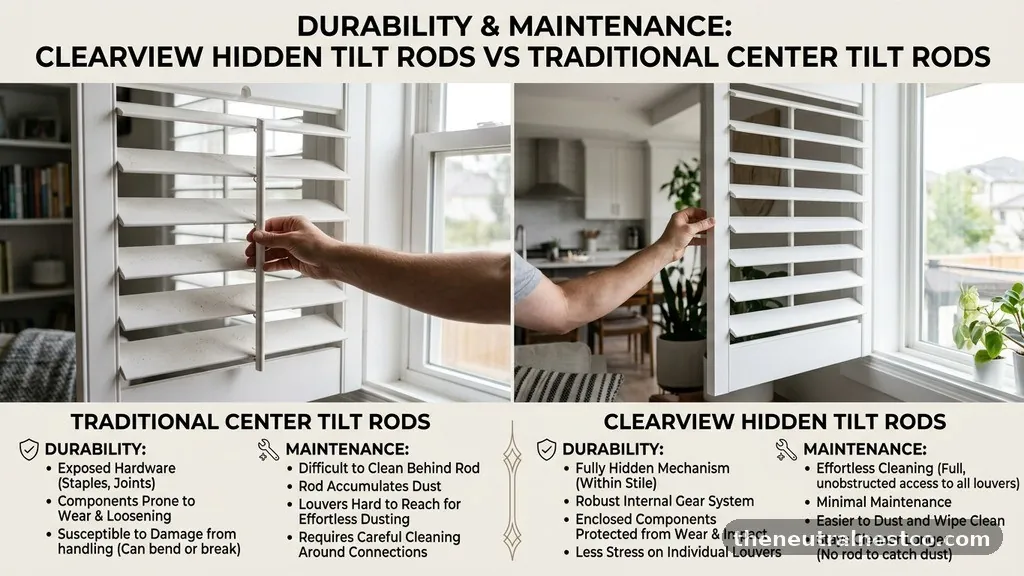
Maintaining your shutters is essential for keeping them functional for years. Traditional rods require regular inspection to ensure that the staples are flush with the wood and that the rod isn’t rubbing against the louver frame.
If the finish wears off where the rod touches the louver, you may need to touch up the paint to prevent wood rot or aesthetic degradation. Dust also accumulates behind the rod, requiring a more careful cleaning approach to avoid snagging the small connector staples.
Clearview systems offer a distinct advantage in terms of maintenance. With no external hardware, there are no staples to check and no rods to polish or paint.
Dusting is significantly faster and easier, as you can simply wipe across the louvers without navigating around a vertical obstruction. The internal mechanism is essentially a “set and forget” system, which appeals to homeowners who prefer a clean look that doesn’t demand frequent upkeep.
Shutter Material Compatibility
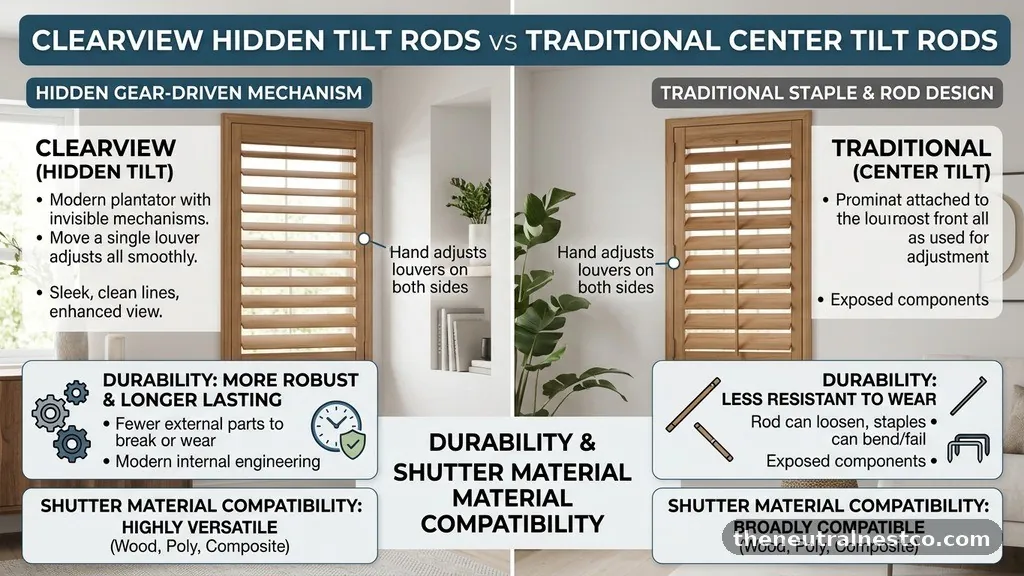
The type of material you choose for your shutters also dictates which tilt system will be the most durable. For solid wood shutters, a traditional center rod is a classic choice, but the weight of the timber can sometimes put extra strain on the rod’s connection points. If the wood is heavy, the center rod must be robust enough to handle the weight of every louver without bowing.
For composite or vinyl shutters, which are increasingly popular due to their moisture resistance, hidden tilt systems are often the superior choice. These materials are heavier than some wood species, and an internal gear system is better equipped to distribute the force required to tilt a large, heavy panel. By using an internal mechanism, the shutter maintains a uniform look and avoids the potential for a long, heavy center rod to sag under its own weight over time.
Aesthetic Impact on Long-Term Value
While durability is the primary focus, the long-term value of your investment is tied to how the shutters age visually. Traditional rods can make a room look dated or “busy” if there are many windows in a single space. As design trends shift toward minimalism, the sleek look of hidden tilt systems often maintains a higher resale appeal.
A home with clean, modern window treatments is often perceived as more updated, which can be a factor when evaluating the total value of your home improvements. Because Clearview rods don’t break or look worn as easily as center rods, the shutters retain their original, high-end appearance for much longer. This aesthetic longevity, combined with the mechanical durability of the hidden system, makes it a smart choice for those planning to stay in their homes for many years.
Summary of Key Differences
To help visualize the trade-offs, it is useful to compare the two systems across common categories of concern for homeowners.
| Feature | Traditional Center Tilt | Clearview Hidden Tilt |
|---|---|---|
| Maintenance | Moderate (requires staple checks) | Low (no external parts) |
| Repair Difficulty | Easy (often DIY) | Hard (professional service) |
| Visual Style | Classic, traditional | Modern, minimalist |
| Vulnerability | Higher (exposed to impact) | Lower (concealed) |
Common Challenges and Solutions
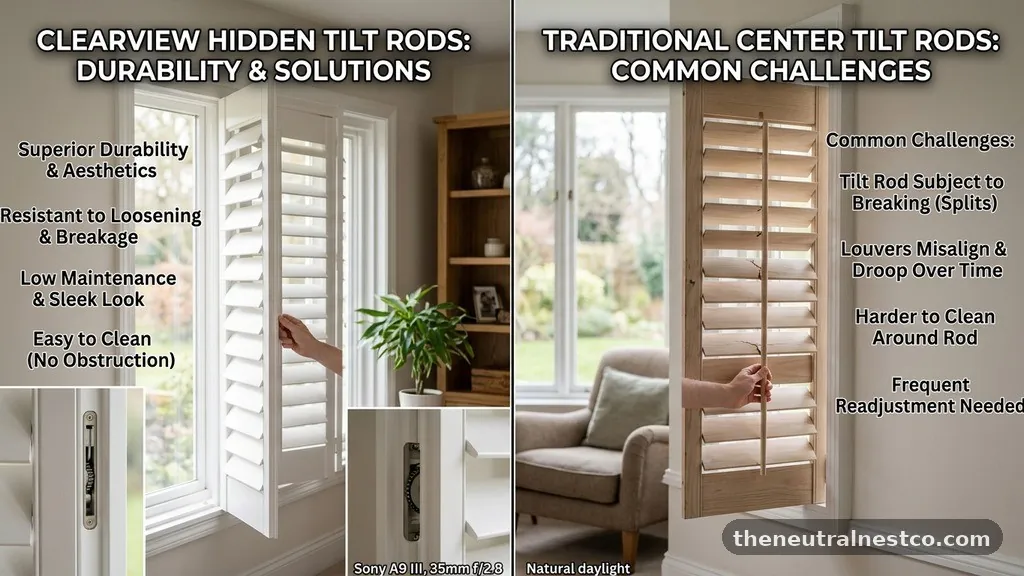
Even with the most durable system, issues can arise. Traditional rods are prone to “loose louvers,” where a single slat won’t stay in the desired position because the tension screw is worn. This is easily fixed by tightening the tension screw on the side of the shutter panel, a task most homeowners can perform in minutes.
With hidden tilt systems, the most common issue is a gear slipping or a connector rod disconnecting inside the panel. This is rare, but if it happens, it usually requires a professional to open the frame or remove the panel for repair.
While this is less frequent than a loose staple, it is more difficult to resolve on your own. It is worth weighing the likelihood of simple, frequent repairs against the potential for rare, complex ones.
Selecting the Best Option for Your Home
Choosing between these two styles ultimately depends on your lifestyle. If you have a busy household with children or pets, the hidden tilt system’s durability against impact makes it the clear winner. The risk of snagging an external rod is simply too high, and the internal components are designed to withstand the wear and tear of a high-traffic environment.
If you prefer a classic, colonial, or cottage aesthetic, the traditional center rod is part of that look. In these cases, you can improve durability by choosing high-quality materials, such as hardwoods with reinforced metal staples. You should also consider the size of your windows; very tall panels benefit from the structural stability of a well-made center rod, provided it is installed by a professional who ensures the tension is balanced correctly.
Frequently Asked Questions
Is it possible to switch from a center tilt rod to a hidden tilt system later?
No, you generally cannot convert an existing shutter panel from one system to the other. The construction of the shutter frame is different for each style, as the hidden tilt system requires specific routing and space within the frame to house the internal gears.
Do hidden tilt shutters cost more than traditional options?
Yes, hidden tilt systems are typically priced higher than traditional center tilt rods. The added cost reflects the more complex manufacturing process and the specialized internal hardware required to operate the louvers without an external lever.
Are there situations where a center tilt rod is actually better?
Traditional center tilt rods are often preferred for very large or heavy panels where the mechanical advantage of a central lever makes it easier to operate all louvers at once. They are also favored for those who want a tactile, traditional experience when adjusting their light levels.
Does the hidden tilt mechanism affect the amount of light the shutters block?
No, the light-blocking capability is identical between the two styles. Both systems allow for full closure of the louvers, so your ability to darken a room or maintain privacy remains exactly the same regardless of which tilt system you choose.
How do I know if the internal gears in my hidden tilt shutters are failing?
If you notice that some louvers move while others remain stationary, or if you feel a “grinding” sensation when tilting the slats, the internal gear mechanism may be wearing out. This is a sign that the components need lubrication or replacement by a professional.
Conclusion
Evaluating Clearview hidden tilt rods vs traditional center tilt rods: durability requires looking at both the frequency of maintenance and the severity of potential failures. While traditional center tilt rods are easier to repair if they break, their exposed design makes them more vulnerable to daily wear and accidental damage. Conversely, hidden tilt systems offer a protected, long-lasting mechanical solution that aligns with a modern design aesthetic, even if they require professional intervention for rare internal issues.
Your decision should prioritize your household’s activity level and the long-term look you want to achieve for your windows. By weighing these factors, you can select the shutter style that serves your home best for years to come.