
Why Do Plantation Shutter Louvers Drop Closed on Their Own (Tension Screws)?
Dealing with plantation shutter louvers drop closed on their own (tension screws) is a common annoyance for many homeowners. When your window treatments refuse to stay in the position you choose, it usually signals that the internal friction mechanism has lost its grip. You don’t need to be a master carpenter to restore your shutters to full functionality, as the fix typically involves simple manual adjustments.
This article explains exactly why this happens and how you can tighten the hardware to regain control over your light and privacy. By understanding the mechanics behind these panels, you can maintain your home’s aesthetic without calling for expensive professional repairs.
Locating the Tension Screws
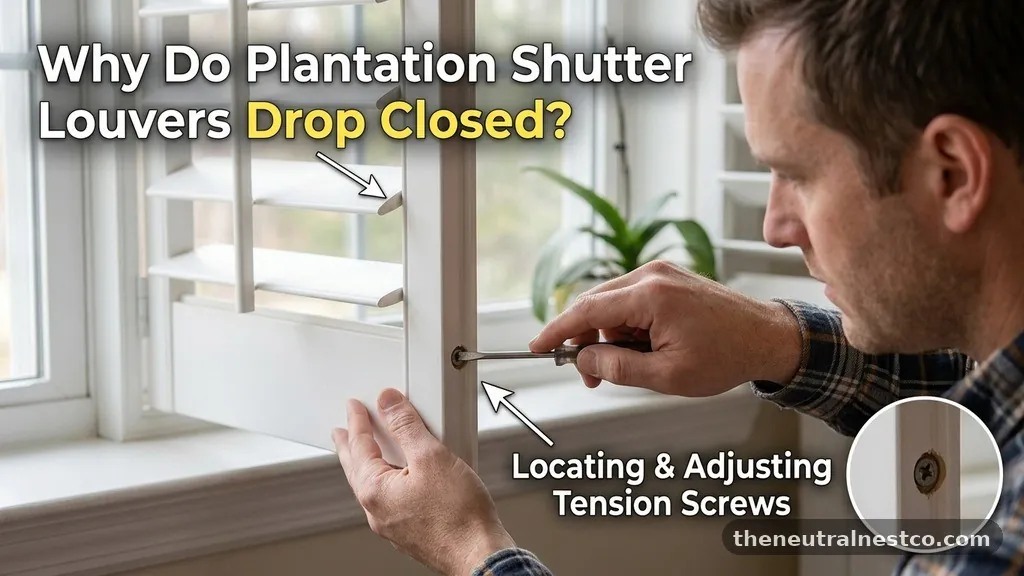
You will typically find one or two small holes on either the left or right side of the panel, depending on how the unit was installed. Sometimes these screws are covered by a small plastic or wooden cap to maintain a clean appearance.
If you don’t see an obvious screw head, look for a small circular plug that matches the color and texture of your shutter material. You can gently pry this cover off using a flathead screwdriver or a small hobby knife. Once the cover is removed, you will see a screw head recessed into the stile.
This screw acts as a brake, pressing against the internal gears or pins that hold the louver in place. Over years of opening and closing the window treatments, the vibration and movement naturally cause this screw to back out slightly.
Adjusting Your Shutter Tension
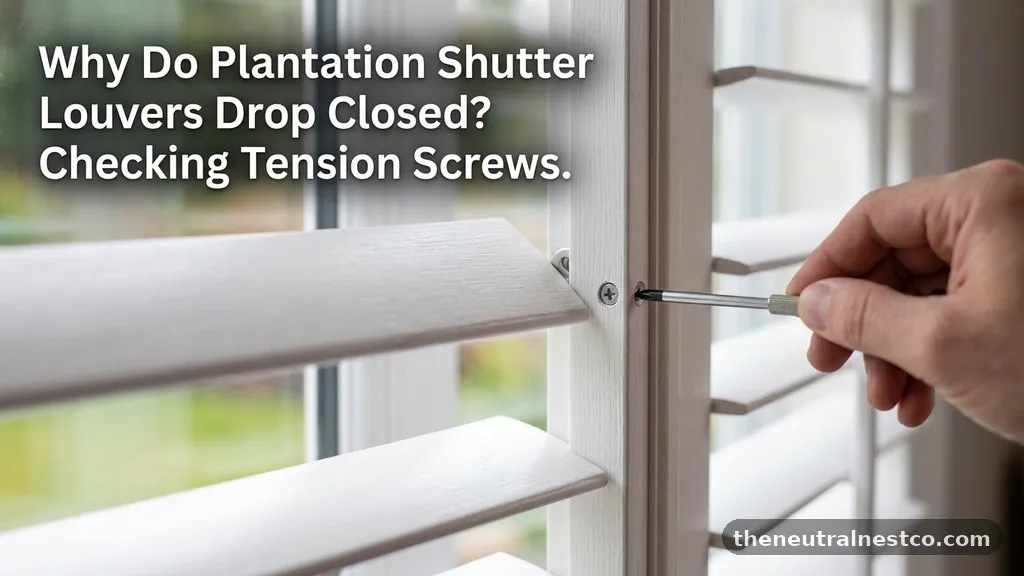
Once you have located the tension screw, the adjustment process is remarkably straightforward. Use a standard Phillips or flathead screwdriver that fits snugly into the screw head to avoid stripping the metal.
Turn the screw clockwise in very small increments, usually just a quarter or half-turn at a time. It is important not to overtighten, as this can make the louvers feel stiff or even cause the internal hardware to snap under excessive pressure.
After making a small adjustment, move the louver up and down to test the resistance. You want the blade to move smoothly but stay firmly in any position you set. If it still falls, continue with another quarter-turn and test again.
Many homeowners make the mistake of cranking the screw as hard as possible, but this is counterproductive. The goal is to create just enough friction to hold the weight of the material against the force of gravity.
The Role of Material and Weight
If your shutters are made of heavy basswood or mahogany, gravity pulls on the louvers with more force. This constant downward pull can wear out the internal friction mechanisms faster than it would on lightweight hollow vinyl shutters.
Synthetic materials like PVC or composite wood often have different internal hardware designs compared to traditional timber. Some composite shutters use a spring-loaded tension system rather than a direct-contact screw. If your shutter uses a spring system, the screw might not tighten against the louver directly but instead increases the pressure on the spring.
Always check your manufacturer’s documentation if you are unsure, as forcing a screw on a spring-loaded model can cause mechanical failure.
When to Replace Shutter Pins
If you have tightened the tension screw as far as it will go and the louver still drops, the issue might not be the screw itself. The internal pin that connects the louver to the stile may have snapped or become excessively worn.
Over time, these small pins—often made of plastic or nylon—can break due to repeated stress or sun exposure. When a pin breaks, the louver loses its anchor point, making it impossible for any amount of tension adjustment to keep it open.
To inspect the pins, you may need to carefully remove the louver from the frame. This involves popping one side of the louver out of the stile, which usually requires a specialized repair approach for historic window elements to ensure you don’t crack the surrounding wood. If you find a broken pin, you can purchase a replacement kit online.
These kits are generally inexpensive and allow you to replace just the faulty component rather than the entire shutter panel.
Troubleshooting Common Shutter Issues
Check the screws on the hinges that attach the shutter to the window frame. If these are loose, the entire panel will tilt, which can prevent the louvers from closing properly or cause them to fall shut due to the misalignment.
Another common issue is the tilt rod connecting the louvers. If the small staples or screws that attach the tilt rod to the individual blades come loose, the rod might hang heavy on one side. This added weight can force the louvers to drop closed, even if the tension screw is perfectly adjusted.
Check each staple to ensure it is seated firmly in the wood. If a staple has pulled out, you can often re-seat it with a tiny drop of wood glue to provide a more permanent hold.
Comparing Shutter Maintenance Needs
Different types of plantation shutters have distinct maintenance profiles based on their construction. Understanding these differences can help you anticipate when you might need to adjust your hardware.
| Shutter Material | Common Tension Issue | Maintenance Frequency |
|---|---|---|
| Solid Wood | Screw loosening due to weight | Every 12–24 months |
| Composite/MDF | Spring mechanism fatigue | Rarely |
| Vinyl/PVC | Pin breakage | Every 3–5 years |
Preventing Future Loosening
Once you have successfully tightened your shutters, there are a few habits you can adopt to keep them in good working order. Avoid slamming the shutters shut or opening them with excessive force, as this momentum puts unnecessary stress on the tension hardware. When cleaning your shutters, use a soft, dry microfiber cloth rather than liquid cleaners, which can seep into the screw holes and cause the wood to swell or the metal hardware to corrode.
It is also helpful to keep the room temperature relatively stable. Extreme heat and humidity can cause wood to expand and contract, which subtly changes the fit of the louvers within the frame. If you live in a climate with drastic seasonal changes, expect to perform a quick tension check during the transition from winter to summer.
A few minutes of preventative maintenance once a year can save you from having to perform more involved repairs later.
Essential Tools for Shutter Repair
You do not need a professional workshop to maintain your home’s window treatments. A basic toolkit will suffice for 90% of all shutter-related maintenance tasks. Having the right tools on hand makes the job safer for both you and your furniture.
- Precision flathead screwdriver for removing screw covers.
- Phillips head screwdriver for adjusting the actual tension screws.
- Needle-nose pliers for extracting broken pins or repositioning staples.
- Wood glue or wood filler for securing loose staples or repairing small cracks.
- Microfiber cloth for cleaning and dusting the louvers.
- Replacement plastic or nylon pins for common repair kits.
When to Call a Professional

Sometimes, the internal mechanism of a plantation shutter becomes so worn that simple adjustments are no longer effective. If you have tightened the tension screws, checked the pins, and verified that the frame is square, but the louvers still refuse to stay open, there may be an issue with the internal gear track. This is more common in high-end motorized or hidden-tilt shutters where the mechanism is fully enclosed inside the stile.
Attempting to disassemble an enclosed gear system can lead to permanent damage if you aren’t familiar with the specific brand’s design. If you have expensive custom shutters that are still under warranty, contact the original installer before attempting any repairs. They may be able to send a technician to perform the adjustment for free or provide specific guidance for your model.
Professional repair is also a wise choice if you have a large number of shutters that all seem to be failing at once, as this could indicate a manufacturing defect.
Understanding the Internal Mechanism
To truly master the care of your window treatments, it helps to visualize what is happening inside the stile. Most plantation shutters use a metal or plastic tensioner that sits against the side of the louver’s pivot point.
When you turn the tension screw, you are essentially increasing the clamping force of a washer or a spring against that pivot. If the pivot point itself has become smooth or rounded from years of friction, it may no longer provide enough surface area for the tensioner to grip.
In these cases, the screw is fine, but the physical interface between the louver and the frame is worn out. Some DIY enthusiasts have found success by adding a tiny amount of friction-increasing material, like a small piece of adhesive felt or a specialized lubricant, to the pivot point. However, this is a delicate procedure.
Before trying any modifications, always ensure that you have exhausted the simple option of just tightening the factory-installed tension screw.
Frequently Asked Questions How do I know if my tension screw is stripped?
A stripped screw head will not allow your screwdriver to grip the slot, often resulting in the tool slipping out when you apply pressure. If the screw turns but you feel no change in the resistance of the louver, the threads inside the stile might be stripped. In this case, you may need a slightly larger screw or a small amount of wood filler to recreate the thread.
Can humidity cause louvers to drop?
Yes, humidity causes wood to swell, which can change the amount of friction inside the shutter panel.
If the wood swells significantly, it might make the louver feel tighter, but it can also cause the internal hardware to misalign. When the humidity drops and the wood shrinks, the louver may suddenly become loose and fall, even if the screw wasn’t touched.
Are there different types of plantation shutter hardware?
Yes, hardware varies significantly between manufacturers. Some use metal tension screws, while others use plastic internal clips or nylon bushings.
It is important to identify your specific shutter brand if you are ordering replacement parts, as these components are rarely universal across different product lines.
Is it normal for shutters to loosen over time?
Yes, it is perfectly normal for plantation shutters to require periodic tension adjustments. The mechanical wear caused by daily opening and closing is inevitable in any moving part. Think of it like a door hinge that needs occasional tightening; it doesn’t mean the product is defective, just that it requires standard maintenance.
Can I fix a louver that won’t stay open without a tension screw?
Some older or budget shutters don’t have visible tension screws.
These models often rely on a friction pin system that is built into the end of the louver. If these are loose, you may need to remove the louver and carefully spread the pin slightly or replace it with a new one to restore the necessary tension against the stile.
Final Thoughts on Shutter Care
Maintaining your plantation shutters is a manageable task that ensures your home remains both functional and visually appealing. By understanding why plantation shutter louvers drop closed on their own (tension screws), you can quickly address the root cause of the problem without unnecessary stress.
Most of the time, a simple turn of a screwdriver is all that stands between a sagging shutter and a perfectly positioned one. Remember to start with small adjustments, check your pins for wear, and keep your maintenance tools organized for future use.
Keeping your shutters in top shape not only improves your control over light and privacy but also extends the life of your home’s beautiful window treatments. If you encounter persistent issues, don’t hesitate to consult with a professional to avoid damaging the internal mechanisms of your specific shutter system.