2.5-Inch vs 3.5-Inch vs 4.5-Inch Louvers: Which Provides Better View?
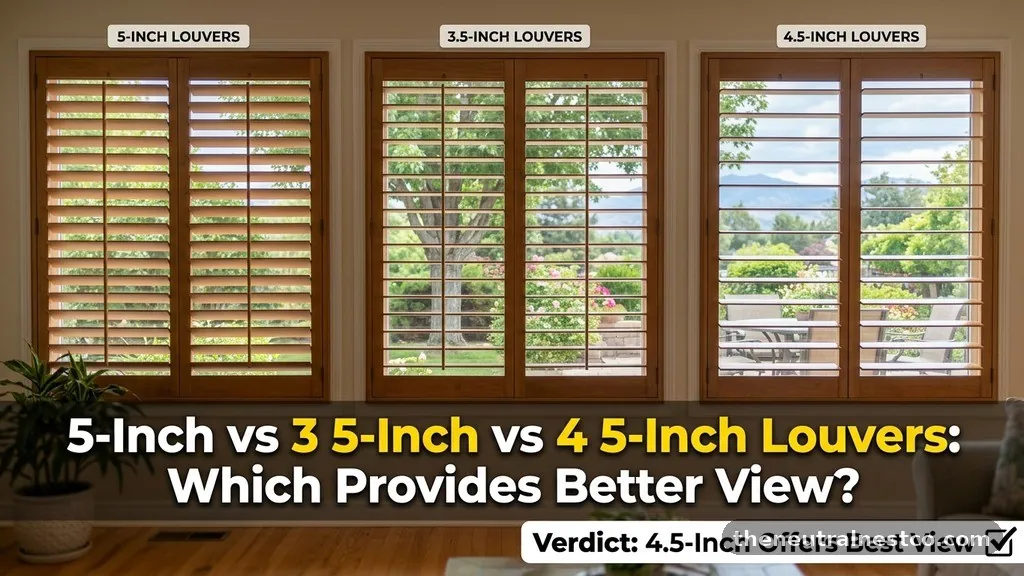
Choosing between 2.5-inch vs 3.5-inch vs 4.5-inch louvers is the most critical decision when ordering custom plantation shutters. While many homeowners focus solely on the material or color, the slat width dictates how much natural light enters your home and how clear your outdoor view remains. If you prioritize a wide-open perspective with minimal visual obstruction, the 4.5-inch option is the superior choice.
However, smaller sizes offer a more traditional, intricate look that suits specific architectural styles. Understanding how these measurements impact your daily living experience will help you avoid costly mistakes and ensure your window treatments perform exactly as you intend.
The Verdict: Which Size Offers the Best View?
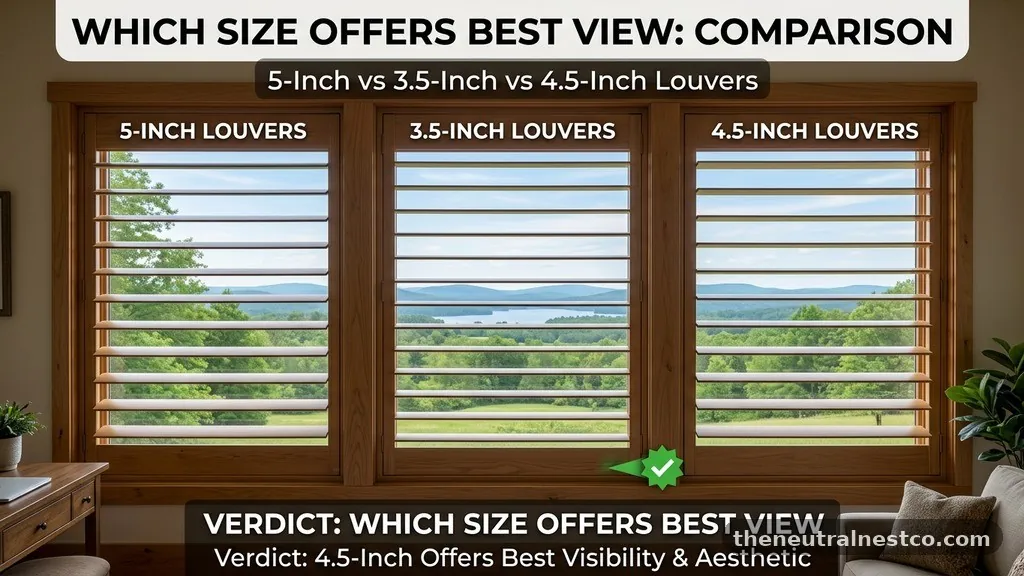
If your primary goal is maximizing your view of the outdoors, the 4.5-inch louver is the clear winner. Larger slats mean fewer horizontal lines intersecting your field of vision when the shutters are in the open position. Because there are fewer louvers per panel, the gaps between them are wider, effectively creating a more expansive window to the outside world.
Conversely, the 2.5-inch louver acts more like a screen, creating a dense, busy pattern of lines that can feel cluttered. If you have a beautiful landscape or a large backyard you want to showcase, the 2.5-inch size will significantly limit your clarity. Most modern interior design trends lean toward the 3.5-inch or 4.5-inch options precisely because they feel less intrusive.
When you compare the total surface area of glass covered by the shutter structure, the 4.5-inch louver leaves more of the window pane unobstructed. This makes them ideal for floor-to-ceiling windows or large sliding glass doors where you want to maintain a sense of connection with the exterior. If you have smaller windows, you might find that the 3.5-inch size offers the perfect balance between privacy and visibility.
Understanding the 2.5-Inch Traditional Aesthetic
The 2.5-inch louver is often referred to as the traditional choice in the shutter industry. It gained immense popularity in the mid-20th century and remains a staple for homeowners who prefer a classic, colonial, or cottage-style aesthetic. Because the slats are smaller, they require more individual pieces to cover the height of a window.
This higher density of slats creates a tighter, more intricate look that many people associate with historic homes. If you are renovating a period-correct property, using anything larger than 2.5 inches might look out of place or overly contemporary. The smaller scale provides a sense of detail that larger louvers simply cannot replicate.
However, this traditional look comes with a trade-off regarding light control and view. The smaller gaps between slats mean that even when the shutters are fully open, you still experience a significant amount of visual “noise.” It is a deliberate design choice that prioritizes the shutter as a decorative element rather than a functional window covering.
The 3.5-Inch Middle Ground
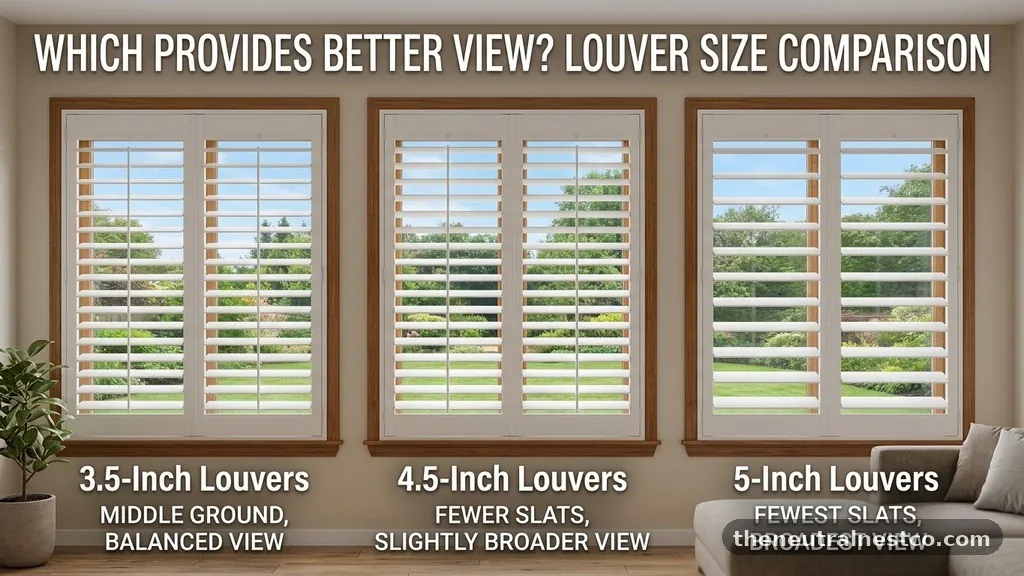
For many homeowners, the 3.5-inch louver represents the “goldilocks” zone of window treatments. It is wide enough to provide a clear, modern view of the outdoors without feeling too sparse or industrial. You get a significant improvement in light intake compared to the smaller 2.5-inch option, making your rooms feel brighter and more airy.
This size works exceptionally well in standard residential windows, such as those found in bedrooms, living rooms, and kitchens. It is versatile enough to blend with both traditional and modern decor, providing a clean, balanced appearance. Many designers recommend this size as the default for most home projects because it is rarely the wrong choice.
Because it is the most popular size, you will find it is often the most cost-effective option during production runs. If you are looking to balance budget with performance, the 3.5-inch louver provides the best return on investment. It delivers a noticeable upgrade in visibility while maintaining enough structural density to provide excellent privacy when closed.
Maximizing Visibility with 4.5-Inch Louvers
The 4.5-inch louver is the modern standard for those who prioritize a panoramic view. By utilizing the largest available slat size, you reduce the number of horizontal bars obstructing your line of sight by nearly half compared to the 2.5-inch variety. This creates a sleek, minimalist look that makes your windows feel like part of the room’s architecture rather than an obstacle.
These larger louvers are particularly effective for expansive walls of glass or rooms with high ceilings. In these environments, smaller slats can look busy and disproportionate to the scale of the window. The 4.5-inch size creates a bold, clean aesthetic that complements contemporary interior design trends.
You will also find that cleaning 4.5-inch louvers is significantly easier than maintaining smaller ones. With fewer slats to wipe down, you can complete your dusting in a fraction of the time. This practical benefit is often overlooked until the owner is faced with the reality of maintaining multiple large windows.
Comparing the Three Standard Sizes
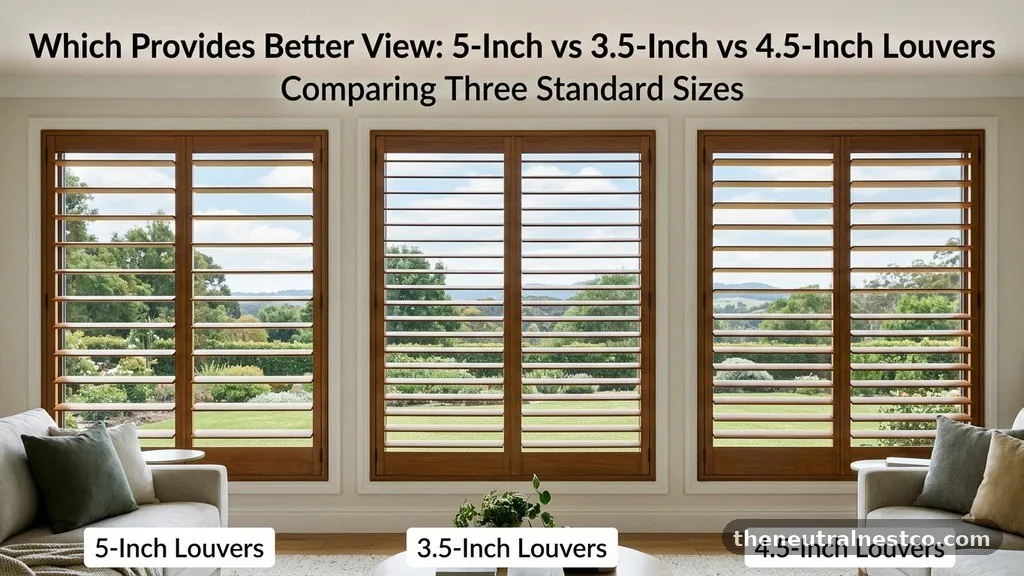
To help you visualize the differences, it is useful to compare how these sizes function in a standard 60-inch high window frame. The number of louvers required to fill that space changes drastically, which in turn changes how the shutter interacts with your home’s lighting.
| Louver Size | Visual Density | Best Application | Light Intake |
|---|---|---|---|
| 2.5-Inch | High (Traditional) | Small Windows/Historic Homes | Moderate |
| 3.5-Inch | Medium (Versatile) | Standard Residential Rooms | High |
| 4.5-Inch | Low (Modern/Open) | Large Windows/Panoramic Views | Maximum |
As the table illustrates, the 2.5-inch louver creates a much denser visual field. By contrast, the 4.5-inch option offers the highest light intake and the most open feel. When you are deciding, consider the size of the window itself, as a 4.5-inch louver might look oversized on a very small bathroom window.
Light Control and Privacy Trade-offs
While the view is a primary concern, you must also consider how these sizes impact your privacy. When you tilt larger louvers to block the view from the street, they create a wider angle of coverage. This means that while you gain a great view when they are open, you need to be more precise with your tilt angles to ensure total privacy at night.
Smaller 2.5-inch louvers offer more “incremental” light control, allowing you to fine-tune exactly how much light filters into the room. Because there are more slats, you can create a gentle gradient of light that is difficult to achieve with the larger 4.5-inch louvers. If you have a room that gets harsh, direct sunlight, the smaller slats might provide better diffusing capabilities.
However, the 4.5-inch louver allows for a more “all-or-nothing” approach. When they are closed, they create a very solid, flat surface that effectively blocks out most external light. This is ideal for media rooms or bedrooms where you want to mimic a blackout effect during the day.
Factors Influencing Your Decision
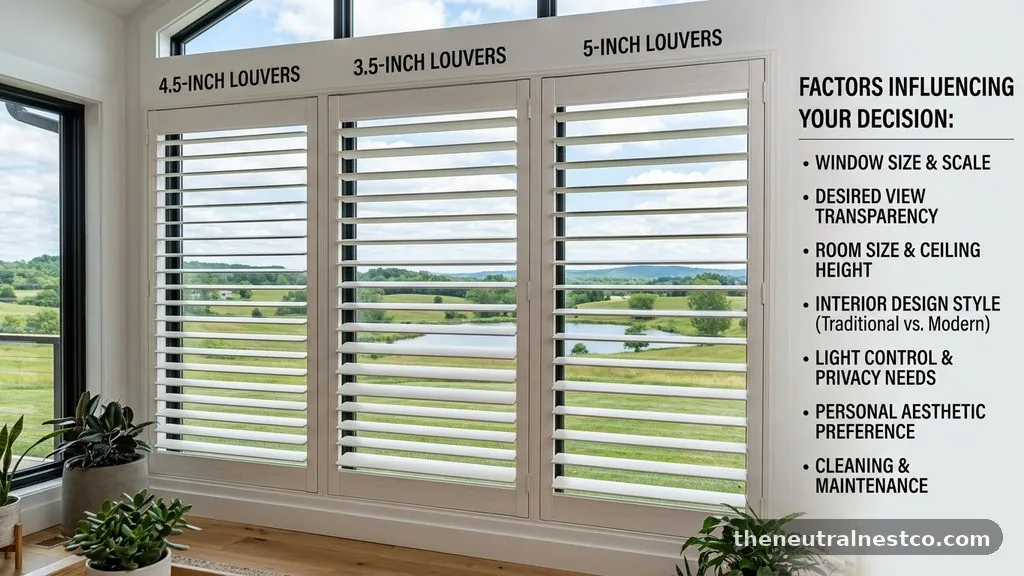
Beyond the view, the depth of your window frame is a crucial technical factor. A 4.5-inch louver requires a deeper frame to rotate fully without hitting the glass or the window trim. If your window casing is shallow, you might be forced to choose a 2.5-inch or 3.5-inch louver regardless of your preference for the view.
You should consult the National Fenestration Rating Council for information on how different window treatments affect the energy efficiency of your home. While the louver size itself is primarily aesthetic, the material and the seal created by the shutter frame are vital for insulation. A well-fitted shutter, regardless of louver size, will help regulate indoor temperatures.
Another factor is the color of the shutters. White or light-colored louvers tend to make a room feel larger and more open, which pairs perfectly with the 4.5-inch size. Darker wood tones can make the shutter structure feel more prominent, which might make a 2.5-inch louver feel even more dense and heavy.
Design and Architectural Harmony
Your home’s architectural style should guide your choice between 2.5-inch vs 3.5-inch vs 4.5-inch louvers. A Victorian-style house with intricate trim and smaller window panes will naturally look better with 2.5-inch slats. Using large 4.5-inch louvers in such a setting can look disjointed and modern, conflicting with the building’s character.
Conversely, a mid-century modern home or a newly built contemporary property benefits from the clean lines of 4.5-inch louvers. These designs prioritize minimalism and connection to the outdoors, which the larger slats support. The goal is to ensure the window treatment feels like a natural extension of the home’s original design language.
If you are unsure, try looking at the existing trim in your home. Thick, substantial baseboards and door casings can often support larger, bolder shutters. If your trim is thin and delicate, smaller louvers might be more proportional to the surrounding elements.
The Impact on Room Perception
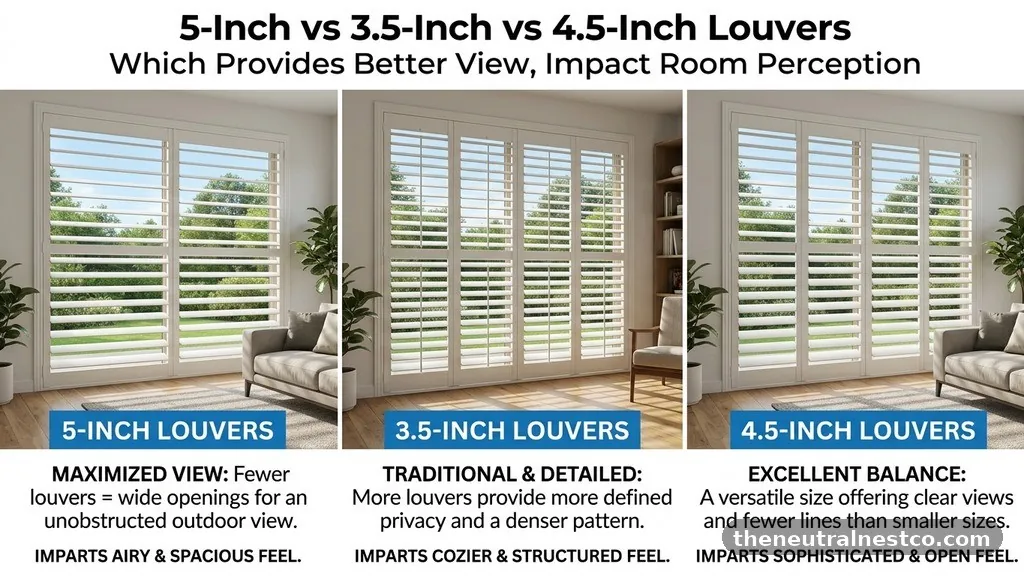
The size of your louvers changes the way a room feels in terms of volume and depth. Larger louvers act as a “frame” for your view, drawing the eye toward the window and the landscape beyond. This can make a small room feel significantly larger because it eliminates the visual clutter of multiple horizontal lines.
Small louvers, by contrast, keep the focus inside the room. They turn the window into a textured wall feature rather than a portal to the outside. This can create a cozy, intimate atmosphere that works very well in dens, reading nooks, or formal dining rooms where you want the focus to remain on the interior design.
Think about the primary function of the room you are outfitting. If you want a space that feels expansive and connected to the garden, prioritize the 4.5-inch louvers. If you want a space that feels snug and protected from the outside world, the 2.5-inch or 3.5-inch options will better serve that purpose.
Future-Proofing Your Window Treatments
Trends in window design are currently shifting toward larger, more open slats. While the 2.5-inch louver was the standard for decades, it is increasingly viewed as dated in new construction. Choosing a 3.5-inch or 4.5-inch louver is a safer bet if you are concerned about the long-term resale value of your home.
These larger sizes have become the industry standard, and prospective buyers typically view them as a premium upgrade. They align with the current desire for more natural light and better views, which are high-priority features for modern homeowners. By opting for a larger slat, you are likely making a decision that will remain stylish for years to come.
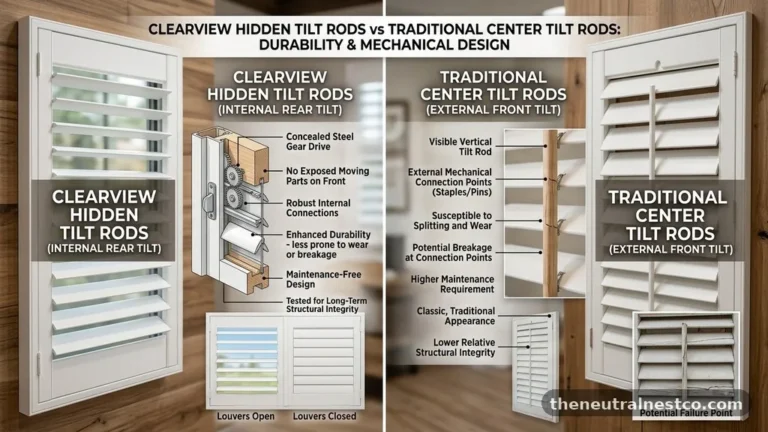
Additionally, larger louvers are generally more durable over time. Because there are fewer moving parts and hinges involved in a panel of 4.5-inch louvers, there is less that can go wrong with the mechanism. This reliability ensures that your shutters will continue to function smoothly throughout the life of the product.
Frequently Asked Questions
Do 4.5-inch louvers provide enough privacy?
Yes, they provide excellent privacy when closed. Because the slats are larger, they overlap more effectively when tilted, creating a very tight, solid barrier that prevents outsiders from seeing into your home.
Can I mix different louver sizes in the same room?
It is generally recommended to keep the louver size consistent within a single room for aesthetic harmony. However, you can use different sizes in different rooms depending on the window size and the specific need for light control in that area.
Does the louver size affect the price of the shutters?
Usually, the price difference is minimal. The cost of shutters is primarily driven by the material used—such as wood, poly, or composite—rather than the size of the louvers themselves.
Are 4.5-inch louvers too heavy for my windows?
In most cases, no. Modern manufacturing uses lightweight materials that are strong enough to support 4.5-inch louvers without placing excessive strain on your window hinges or frames.
Which size is best for a bathroom?
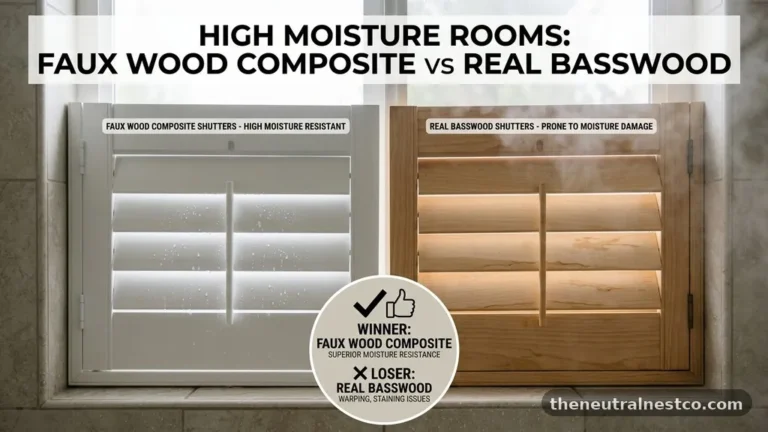
For bathrooms, many people prefer the 3.5-inch size. It provides a great balance of light and privacy, and it is usually easier to manage in the smaller, often moisture-prone window frames found in bathrooms.
Choosing the Right Fit for Your Home
The choice between 2.5-inch vs 3.5-inch vs 4.5-inch louvers ultimately comes down to your personal balance of aesthetic preference and functional needs. If you value a clear, unobstructed view and a modern, airy feel, the 4.5-inch louver is the definitive choice. It maximizes light intake and simplifies the look of your windows, making it the preferred option for most contemporary homes and large-scale windows.
If you are working with a more traditional architectural style or prefer a tighter, more intricate look, the 2.5-inch or 3.5-inch options remain excellent alternatives. They offer a classic charm that larger slats simply cannot replicate.
Assess your window depth, the amount of natural light you want to invite in, and the overall style of your interior before making your final selection. Taking the time to evaluate these factors will ensure your shutters provide the perfect view for years to come.